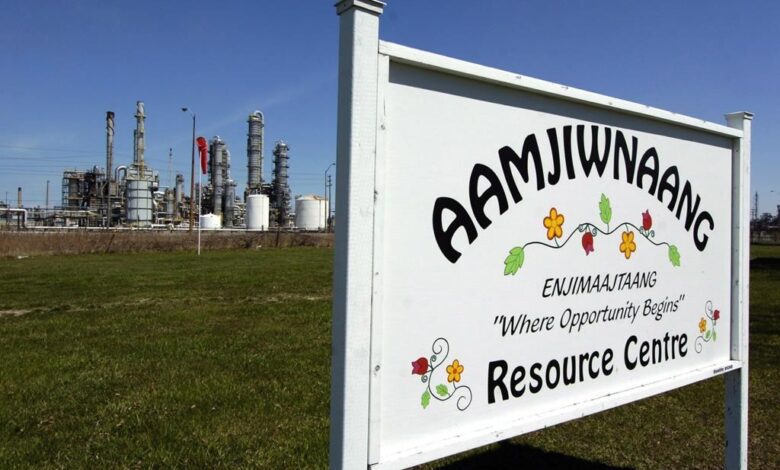
Aamjiwnaang First Nation advised about 100 residents living closest to the INEOS Styrolution plant near Sarnia, Ontario, to leave temporarily while benzene was removed from the site in October 2024. The precaution followed months of community health concerns and unusually high monitoring readings.
The First Nation planned its own protective response
Community leaders divided the reserve into risk zones and arranged accommodation and transport for people nearest the facility. The evacuation was precautionary and locally directed; it was not evidence that every resident had received a dangerous exposure during the transfer.
Officials expected the work could temporarily increase benzene emissions. Monitors were placed around the community, and residents were given contacts and instructions as the operation proceeded.
Benzene is a serious industrial hazard
Benzene is used in chemical manufacturing and is also produced by petroleum processes. Long-term exposure is associated with blood disorders and cancers, including leukemia, while short-term high exposure can cause dizziness, headache and other symptoms.
Health risk depends on concentration, duration and route of exposure. A monitor reading, odour or reported symptom should trigger assessment, but none alone establishes an individual’s diagnosis.
April readings had damaged confidence
Aamjiwnaang closed and evacuated its band office in April 2024 after elevated benzene readings and complaints of nausea, headache and dizziness. The office sits near the industrial complex known as Chemical Valley.
Ontario issued orders requiring INEOS to control emissions and advance a benzene-reduction plan. The company disputed some interpretations of the monitoring data while shutting the styrene facility for maintenance.
The October work removed stored material
The approved destocking plan moved benzene from the site rather than restarting normal production. INEOS said it developed the plan with the First Nation, Ontario’s environment ministry and Environment and Climate Change Canada.
The company later reported completing the operation. Completion of a transfer did not erase the earlier exposure dispute or the need to verify emissions through independent data.
Residents faced a cumulative industrial burden
Aamjiwnaang is surrounded by refineries and chemical facilities. Community concern therefore extended beyond one tank or one company to combined pollution from many sources over time.
Regulating facilities separately can miss cumulative exposure. Effective protection requires monitoring that reflects where people live, work, attend school and gather, with results communicated quickly in understandable form.
Jurisdiction was divided
Ontario regulates many industrial air emissions, the federal government can use environmental protection powers, and the First Nation has responsibility for emergency decisions affecting its members. Fragmented authority can delay action unless agencies share data and define who leads.
Indigenous consultation must involve more than notice after a technical plan is complete. Community knowledge and consent are necessary for evacuation thresholds, monitor placement and safe-return decisions.
The plant’s future changed
INEOS announced in 2024 that it would permanently close the Sarnia site. Closure can reduce future operational emissions, but decommissioning, remaining chemicals, contaminated land and long-term monitoring still require oversight.
Jobs and the local industrial economy also matter. A just transition should protect workers without treating employment as a reason to discount residents’ health.
The evacuation was a prevention measure
Leaving home carries its own cost, especially for elders, children and people with medical or mobility needs. Authorities should reimburse reasonable expenses, maintain access to medicines and services and publish the evidence used to end an advisory.
The October action showed what residents had demanded throughout the year: precaution before exposure, not reassurance afterward. Trust now depends on transparent monitoring, independent health follow-up and full accountability for the site’s closure and remediation. The absence of a catastrophe during benzene removal would demonstrate that planning worked, not that the community’s concern was unnecessary.