Canada condemned alleged Russian attempts to influence the 2024 United States election after U.S. authorities announced enforcement actions on September 4, 2024. Ottawa’s statement supported the American response and focused on covert influence activity linked by U.S. investigators to Russian state media.
What the United States alleged
The U.S. Department of Justice unsealed an indictment against two employees of RT, the Russian state-controlled broadcaster. Prosecutors alleged that they covertly financed and directed a Tennessee-based content company as part of a nearly US$10 million operation designed to distribute material to American audiences. An indictment states accusations; it is not a finding of guilt.
The U.S. Treasury also imposed sanctions on individuals and entities, while authorities seized internet domains they said were used in a broader influence campaign. The measures described tactics such as concealed funding, deceptive online identities and content intended to deepen political divisions.
Canada’s response
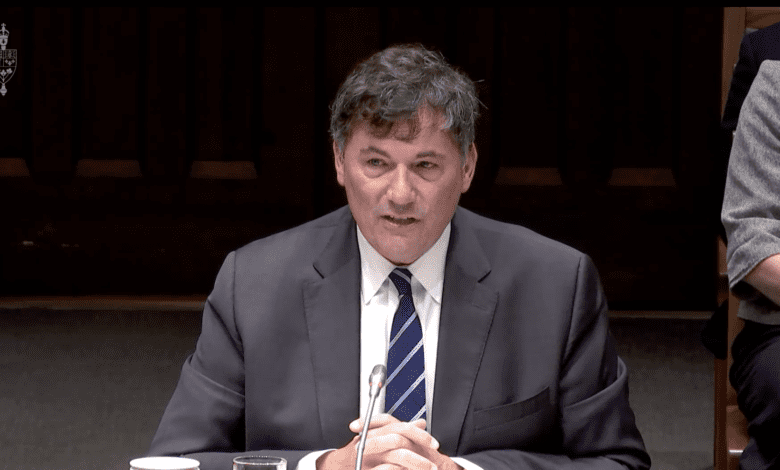
Public Safety Canada said the country commended the U.S. action and unequivocally condemned attempts by Russia, including through RT, to spread disinformation and influence election outcomes. The statement said Canada would continue working with allies against foreign interference.
Canadian officials did not disclose a new Canadian criminal case in that statement and said they could not comment on ongoing investigations. They warned that Canadians who knowingly and illegally assist a foreign state’s interference activity could face consequences under Canadian law. That warning should not be converted into an allegation against any unnamed individual.
RT’s status in Canada
In March 2022, the Canadian Radio-television and Telecommunications Commission removed RT and RT France from the list of non-Canadian programming services authorized for distribution. The regulator concluded that their programming undermined democratic institutions in the context of Russia’s invasion of Ukraine. The decision concerned carriage by Canadian television providers; it did not erase all online access to content originating from the outlets.
Foreign-influence efforts can exploit authentic political disagreements rather than invent every issue they discuss. A message may mix verifiable information with manipulated context, or may be amplified through undisclosed sponsorship. Evaluating it therefore requires attention to provenance, funding and distribution behaviour as well as the literal words.
How to report interference claims responsibly
Government attribution deserves scrutiny, especially when intelligence cannot be fully released. Reliable reporting distinguishes an agency’s allegation from independently proven fact, links to public court documents where possible and records later judgments or dismissals. It should also avoid assuming that every critical opinion or controversial post is foreign-directed.
Readers can reduce exposure to manipulation by checking whether a purported news organization identifies its ownership, whether several independent outlets corroborate the underlying event, and whether a viral account has an authentic history. Reverse-image searches and archived webpages can expose recycled media, but neither popularity nor an anonymous label proves who controls an account.
The September 2024 Canadian statement was a diplomatic and security response to specific U.S. allegations, not a Canadian court verdict. Its defensible core is that Ottawa publicly backed the enforcement actions and condemned covert Russian election interference while leaving criminal determinations to the relevant legal processes.