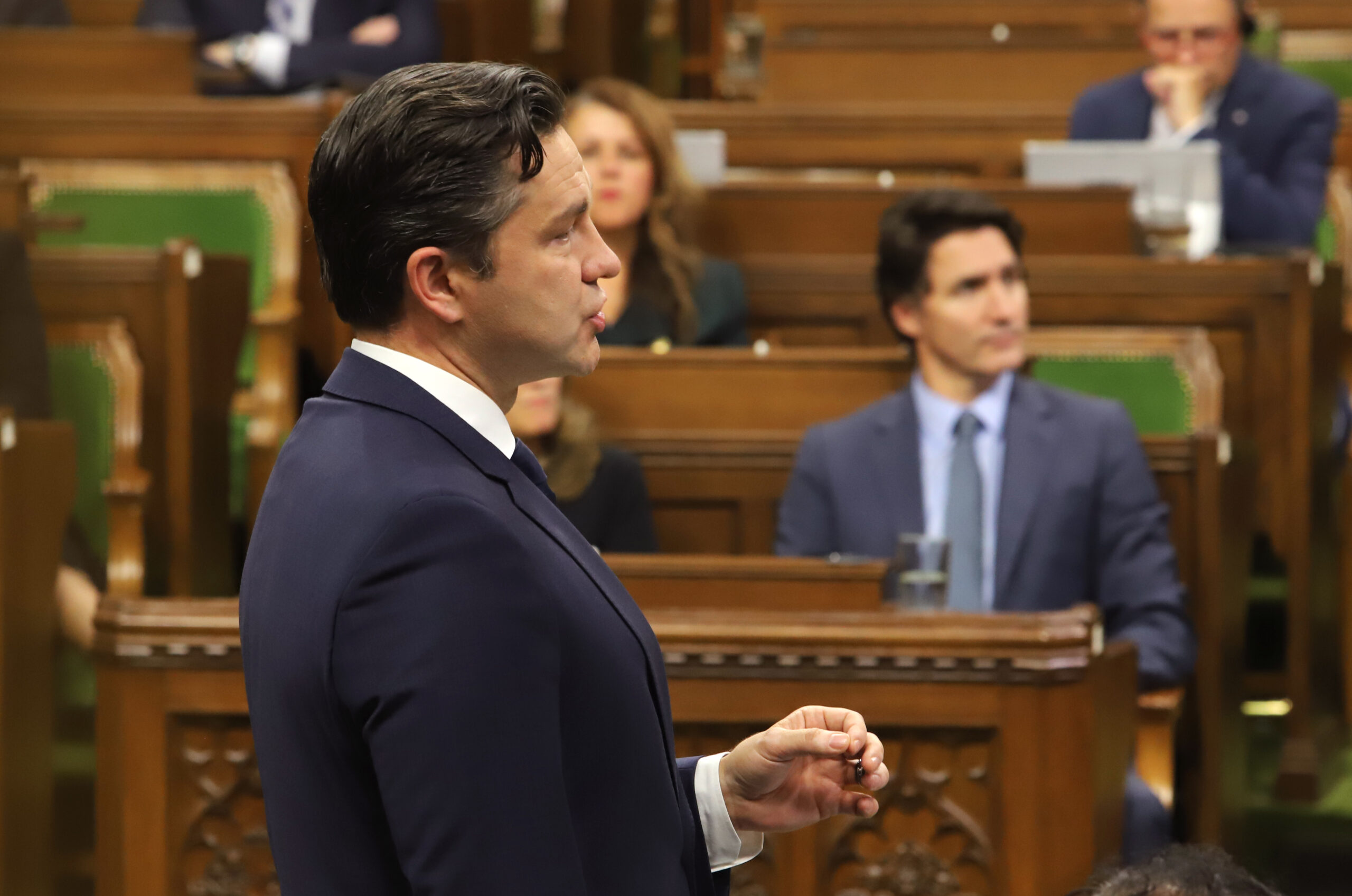
Conservative Leader Pierre Poilievre forced a second confidence vote against Prime Minister Justin Trudeau’s minority Liberal government on October 1, 2024. The House of Commons rejected the motion by 207 votes to 121 after the New Democratic Party, Bloc Québécois and Greens voted against bringing down the government.
The motion used campaign-style language
The Conservative text accused the government of doubling housing costs, taxing food, punishing work, increasing crime and centralizing power. It said Canadians should be offered the party’s programme on taxes, housing, the budget and crime.
A confidence motion is a parliamentary decision about whether the government may continue, not a factual ruling that every assertion in the motion is true.
Defeat would likely have triggered an election
In Canada’s system, a government that clearly loses the confidence of the Commons is normally expected to resign or ask the governor general to dissolve Parliament. Constitutional circumstances can affect the response, but an election was the immediate political objective.
Because the Liberals lacked a majority, they needed at least one other group to oppose or abstain from each attempt to defeat them.
The NDP agreement had already ended
NDP Leader Jagmeet Singh terminated the formal supply-and-confidence agreement that had supported the Liberals on key votes since 2022. He said his party would then decide votes individually.
Ending that agreement did not require the NDP to support every Conservative motion. Voting to keep the government alive on October 1 did not restore the earlier pact.
The Bloc pursued its own leverage
The Bloc Québécois pressed the government on pensions and supply-management legislation while declining to back this Conservative challenge. Its position could change with the issue and timing.
Minority government gives smaller parties influence, but they also weigh the risk that an election will reduce their seats or bargaining power.
It was the second failed attempt in a week
On September 25, a more concise Conservative motion was defeated 211 to 120. The October text changed the political argument but did not assemble a broader coalition.
Opposition days provide legitimate opportunities to test confidence. Repeated failure can still serve campaign strategy by forcing parties to record a position.
The vote did not guarantee long-term survival
A minority government must maintain confidence on later explicit motions and central financial measures. The Commons rejected another Conservative confidence challenge in December, but Liberal internal pressure and political conditions continued to change.
Trudeau announced his intention to resign as Liberal leader in January 2025 after Parliament was prorogued. Mark Carney later became leader and prime minister, and the Liberals won the April 2025 election.
Opinion polls were not House votes
Conservatives led many polls in autumn 2024, giving Poilievre a rational reason to seek an early election. MPs nevertheless represented the existing Parliament until dissolution.
A party’s polling lead does not create a constitutional entitlement to an election, just as surviving confidence does not prove broad public approval.
The immediate result was clear
The motion failed because the Conservatives could not persuade enough other MPs to remove the government. Trudeau remained prime minister, and no election followed from the October 1 vote.
The later leadership change and election should not be projected backward as though the motion succeeded. It was one stage in the instability of the 44th Parliament: politically useful to the opposition, legally consequential if passed, but decisively rejected on the recorded division.