A Transformative Leader Steps Down in Mexico. What Will His Legacy Be?
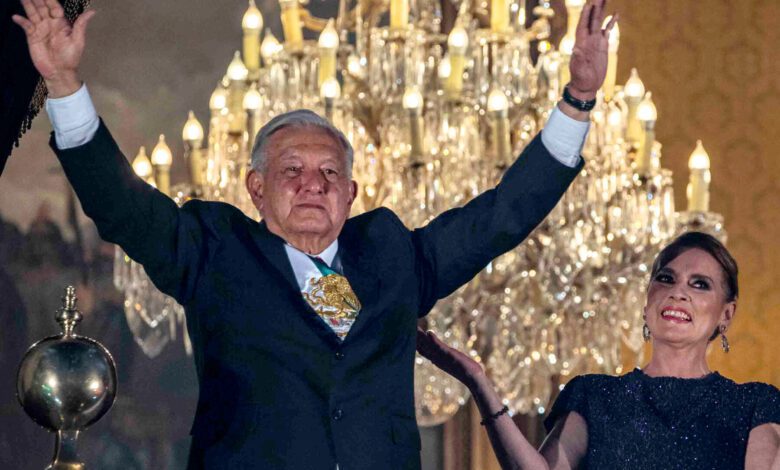
Andrés Manuel López Obrador left Mexico’s presidency on September 30, 2024 after a six-year term that changed the country’s political priorities and language. He expanded income support and state economic intervention while concentrating power, attacking institutional critics and leaving serious problems in security, health and the rule of law.
His movement displaced an older party system
López Obrador won the 2018 election on a promise to put poor Mexicans first and end privileges associated with established elites. His Morena party grew from a new movement into the dominant national force.
Claudia Sheinbaum’s landslide victory in 2024 ensured continuity and made her Mexico’s first woman president. The scale of Morena’s congressional strength also reduced checks from a fragmented opposition.
Income policy delivered visible gains
The government sharply raised the real minimum wage, expanded the universal pension for older people and created scholarships and direct transfers. Official measures showed multidimensional poverty falling between 2018 and 2022 despite the pandemic shock.
Not every improvement came from transfers alone; wages, remittances and labour-market conditions contributed. Extreme poverty and regional inequality remained, especially in southern and Indigenous communities.
Fiscal restraint coexisted with costly flagship projects
López Obrador presented himself as frugal, cut parts of the federal bureaucracy and avoided a huge pandemic stimulus. He also directed public investment toward the Maya Train, the Dos Bocas refinery, a new Mexico City-area airport and the trans-isthmus corridor.
Supporters saw overdue infrastructure and regional development. Critics cited opaque procurement, environmental damage, overruns and weak tests of long-term economic value.
Energy policy restored the state’s central role
The administration favoured national oil company Pemex and the state electricity utility over private renewable investment. It framed energy sovereignty as protection against privatization.
Mexico remained dependent on natural gas from the United States, while Pemex carried heavy debt. Restricting cleaner private generation also complicated emissions and reliability goals.
Violence resisted the promised transformation
López Obrador rejected the language of an all-out drug war and promoted social programmes under the phrase “hugs, not bullets.” Homicides declined from their peak but remained historically high, and disappearances, extortion and territorial control by criminal groups continued.
The armed forces took responsibility for the National Guard and acquired larger roles in ports, customs, airports, construction and commercial projects. Militarization expanded even as the president criticized earlier security strategies.
His democratic record was deeply contested
Daily news conferences gave the president unusual direct communication with voters, but he regularly used them to stigmatize journalists, civil-society groups and autonomous agencies. Government disclosure and media safety remained serious concerns.
He sought to weaken or remake regulators and backed a judicial overhaul that introduced popular election of judges. Supporters called it democratic accountability; legal experts warned it could reduce judicial independence and professional safeguards.
The pandemic exposed state capacity
Mexico suffered extremely high excess mortality and long educational disruption. A reorganization of public health insurance produced gaps in medicines and access even as the government promised universal care.
The experience complicated the administration’s claim that austerity always removed waste without harming essential capacity.
His legacy cannot be reduced to hero or autocrat
López Obrador gave poorer citizens greater material support and political visibility, transformed wage policy and built a durable electoral coalition. Millions regarded him as a leader who spoke to people ignored by earlier governments.
He also normalized attacks on checks and critics, enlarged military power and left violence unresolved. Sheinbaum inherited both the legitimacy of his social agenda and the institutional risks of his governing style. His durable legacy will depend on whether gains in income become better services and opportunity—and whether Mexico’s democracy can preserve independent institutions under the movement he created.