Ontario’s chief animal-welfare inspector said in November 2024 that, based on information provided to her, recent marine-mammal deaths at Marineland did not appear to be related to water quality. Her statement came despite an earlier provincial finding that the Niagara Falls park’s water had failed the standard of care and amid a continuing investigation.
A large number of animal deaths
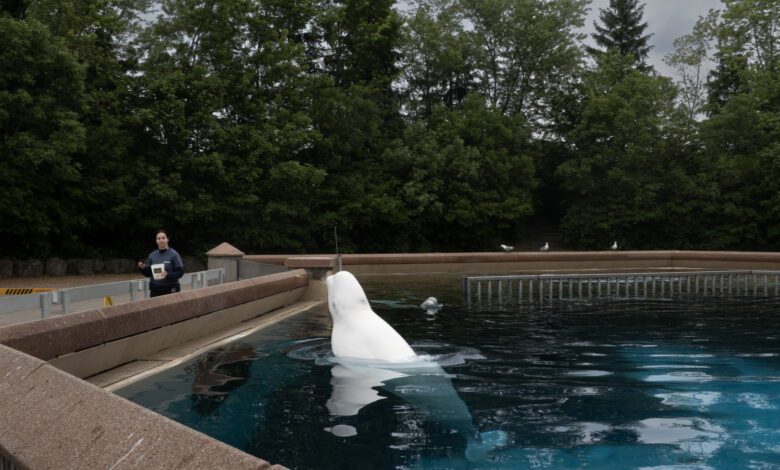
Government records showed five belugas had died at Marineland within the preceding year and 17 since late 2019. Three belugas transferred to a Connecticut aquarium in 2021 had also died. Other deaths at the Ontario park over five years included Kiska, Canada’s last captive killer whale, as well as a dolphin, seals, sea lions and penguins.
Those numbers warranted public concern, but they did not independently establish a common cause. Determining cause requires veterinary records, necropsies, environmental data and an assessment of each animal’s history.
The water-quality history
Ontario’s Animal Welfare Services began investigating Marineland in 2020. In 2021, inspectors declared that marine mammals were in distress because of poor water quality and ordered the park to address the problem. Marineland denied the animals were in distress, appealed the order and later abandoned that appeal.
Chief inspector Melanie Milczynski acknowledged that the water had not met the standard at one stage. She said government and park testing later showed significant improvement. A life-support-system order nevertheless remained open in November 2024, meaning the regulatory file had not simply closed.
What the province did and did not disclose
The province said its specialized team of ten zoo and aquarium inspectors tested Marineland’s water weekly and had visited the park 205 times since the government took over animal-welfare enforcement in 2020. The ministry reported 32 orders since then, four of which remained open.
Another open order concerned record-keeping for marine-mammal treatment. Milczynski said Marineland knew the causes of death but the province was not at liberty to disclose its findings. That lack of public detail limited independent evaluation of the assertion that water was not responsible.
Marineland’s position and public criticism
Marineland said deaths were part of the life cycle of its animal population and maintained that water conditions did not cause them. It said two belugas that died in March had suffered stomach torsion and argued surgery was not possible. The park also criticized the reporting and declined to answer further questions about more recent deaths.
Opposition politicians and animal-rights advocates called for stronger provincial action, including closure of the park. Their demands reflected concern but were policy positions, not veterinary diagnoses.
What accountability requires
Regulators must protect animal welfare while respecting lawful investigative limits. They can improve confidence by publishing inspection methods, compliance dates, anonymized water results, the status of orders and aggregate causes of death where law permits. Independent veterinary review would help when the operator and critics sharply disagree.
The headline’s conclusion therefore needs careful boundaries. The province’s chief inspector said the available information did not connect the deaths with water quality; she did not say Marineland had never experienced water problems. The continuing order and 2021 distress finding remained relevant.
A trustworthy account holds both facts together. Recent water testing had reportedly improved and the province did not attribute the deaths to water, while numerous animal deaths, undisclosed causes and an unfinished investigation justified continued scrutiny. Certainty beyond that record would serve neither animal welfare nor the public.