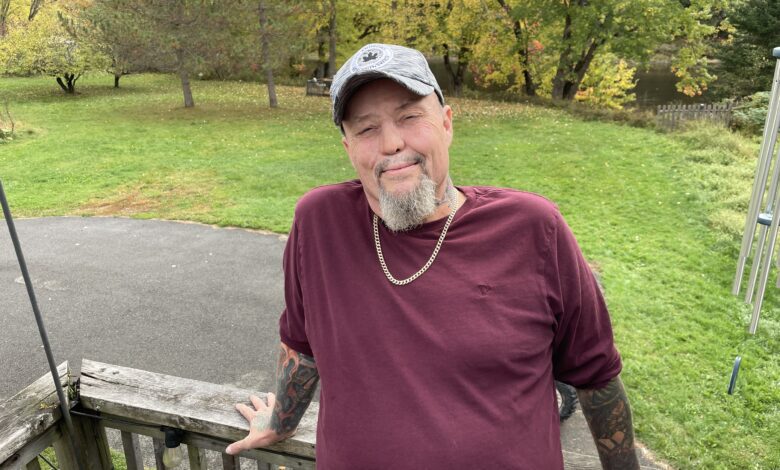
Fred Saulnier of Penniac, New Brunswick spent years avoiding public places after a 2017 car crash severely damaged his face and left him unable to breathe normally through his nose. In 2024, a custom silicone prosthesis made by retired CIA disguise specialist Robert Barron gave him a natural-looking profile and renewed confidence.
The crash and its aftermath
Saulnier said his vehicle struck a power pole and his face hit the steering wheel despite the airbag. The impact forced his nose backward and began a long course of emergency care and reconstruction.
He waited two years for an initial procedure and underwent several operations over about six years. In his account, the results did not restore breathing or an appearance he could accept, and at one point he could breathe only through his mouth.
Isolation became another injury
Saulnier said he left home only when necessary because of staring and anxiety about his appearance. Facial difference can affect employment, relationships and ordinary errands even after the immediate physical injury has healed.
Reporting such an experience should not imply that a person needs to look typical to have dignity. The relevant outcome was Saulnier’s own comfort and choice, not a demand that every visible difference be concealed.
Finding an unusual specialist
An online search led Saulnier to Barron, founder of Custom Prosthetic Designs in Virginia. Barron had created close-range disguises during a career with the United States Central Intelligence Agency before applying the same sculpting and colour-matching skills to medical prostheses.
At 82, Barron said he had performed this humanitarian work for more than two decades, helping people affected by cancer, trauma and domestic violence. His former intelligence career explained the headline, but clinical collaboration and craft determined the result.
Preparing for the prosthesis
Barron consulted Fredericton surgeon Dr. Benjamin Hoyt about removing tissue from prior reconstruction so the device could fit. Surgery and prosthetic design addressed different needs and required coordination rather than one practitioner replacing the other.
Saulnier then spent a week in Virginia in July 2024 while Barron moulded, coloured and fitted a new nose. Silicone can reproduce skin texture and tone, but a successful facial prosthesis also needs secure attachment, comfortable edges and instructions for cleaning and wear.
The first look
Barron recalled presenting the finished result in two mirrors. Saulnier described being able to enter a store smiling instead of worrying about how strangers would react.
The device did not erase the crash, the surgeries or every medical concern. It gave him control over how he appeared and a practical way to re-enter situations he had avoided.
Art and health care meet
Specialists who create facial prostheses combine anatomy, materials science, sculpture and painting. Each piece must match one person under changing light and accommodate movement, skin sensitivity and daily routines.
Devices also require maintenance and eventual replacement as materials age or the wearer’s tissues change. Follow-up access is therefore part of care, especially when the maker is in another country.
The access problem
Saulnier’s search took him from New Brunswick to Virginia. The story did not establish the full cost, insurance coverage or whether a similar service was locally available, questions that matter to other patients considering the same path.
Health systems can improve access by recognizing anaplastology and maxillofacial prosthetics within rehabilitation, funding travel where necessary and giving patients early information about surgical and non-surgical options.
A result defined by the patient
Barron’s background made the transformation striking, but Saulnier’s years of persistence were central. He sought another route after repeated procedures failed to meet his needs and worked with clinicians and an artisan to reach a result he valued.
The most responsible description is not that a prosthetic nose made him whole. Saulnier was already a whole person; the device restored breathing-related function and social confidence on terms he chose, allowing daily life to become less dominated by the injury.