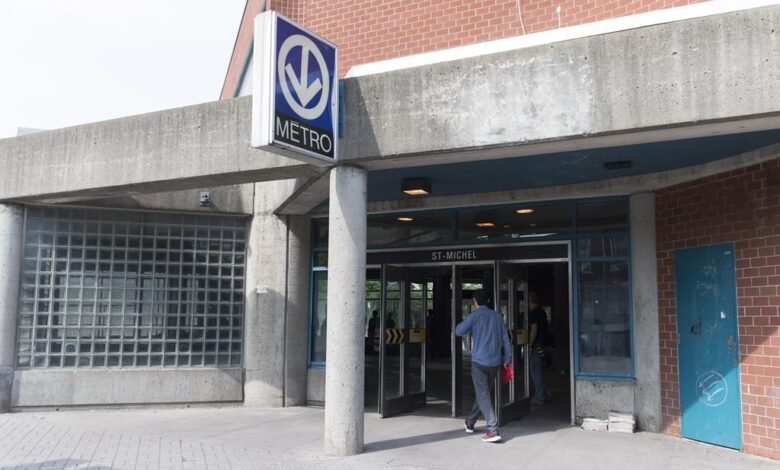
Montréal’s Saint-Michel métro station reopened at 10 a.m. on November 11, 2024, after emergency structural work addressed deterioration in two concrete beams near the main staircase above the Blue line tracks.
The Société de transport de Montréal had closed the station on October 3 when inspections found the beams were in worse condition than expected. The closure lasted more than five weeks while engineers and contractors installed temporary and permanent reinforcement needed for safe passenger service.
What work was completed
The STM said crews erected posts to support the base of the affected beams and bolted steel reinforcement plates to them. Reinforcing steel and an additional layer of concrete were also added as part of the beam-jacketing work.
Structural deterioration does not automatically mean a collapse was imminent, but the location above tracks and a passenger route made precautionary closure necessary. A transit agency has to control access while engineers determine load capacity, stabilise the structure and inspect the completed intervention.
The station reopened before every renovation ended
Reopening meant the STM considered the station safe for customers. It did not mean all building work was finished. The main entrance building was to remain closed until spring 2025 while a renovation project that began earlier in 2024 continued. Passengers used the available alternate entrance arrangements.
Shuttle buses introduced to reduce disruption during the closure stopped operating at 11 a.m. on reopening day. Riders were advised to return to ordinary Blue line service and consult the STM for accessibility and entrance information affected by the continuing construction.
Why a single-station closure affects a wider network
Saint-Michel was then the eastern terminus of the Blue line. Closing a terminal changes how passengers connect to buses and can concentrate transfers at the next station. Replacement buses reduce the impact, but they travel in street traffic and cannot exactly reproduce métro capacity, travel time or weather protection.
The episode also showed the difference between emergency stabilisation and long-term asset renewal. Emergency work addresses the immediate hazard; a renovation programme replaces or rehabilitates aging components and restores areas that may remain closed after trains resume stopping.
How to interpret the archived notice
The November 11 announcement records that the emergency closure ended on that date. It should not be used as a current status notice for entrances, lifts, bus routes or later construction. Montréal passengers should check the live STM service page before travel.
Safety reporting should attribute technical conclusions to the responsible engineers and agency. Photographs of cracked concrete can look alarming, but the relevant evidence includes inspections, support design, load assessment and follow-up monitoring. Conversely, reopening should not prevent scrutiny of why deterioration progressed and how similar structures are inspected across the network.
For the transit authority, the useful follow-up measures are inspection frequency, whether comparable beams need intervention, the final renovation schedule and accessibility during construction. Publishing those details helps passengers understand the difference between a repaired local defect and the condition of the entire Blue line.
Source: Société de transport de Montréal reopening statement, November 11, 2024.