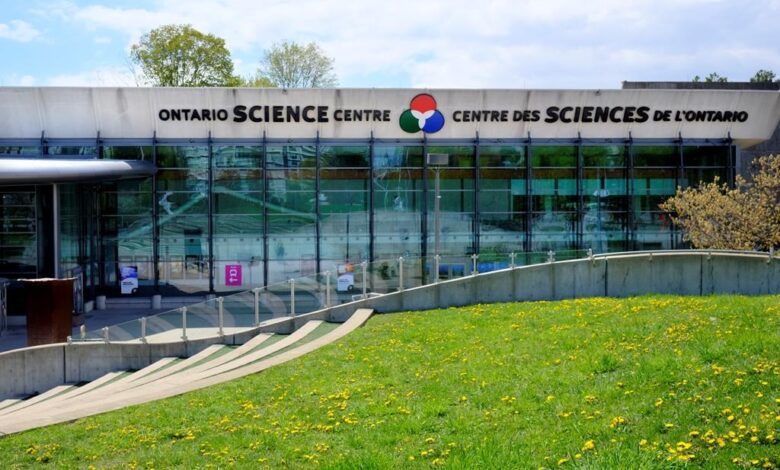
Twenty-eight cleaning employees who had worked at the Ontario Science Centre were told they would lose their jobs by October 31, 2024. Contractor Dexterra issued the notice after the science centre ended its cleaning-services agreement following the attraction’s abrupt closure.
The building closed suddenly in June
Ontario shut the Don Mills facility after an engineering report identified roof concerns. The government said safety required immediate closure, while critics questioned whether repairs and partial operation had been adequately considered.
The public lost access before a permanent replacement was ready.
Contract workers faced delayed consequences
Employees of an outside cleaning company were not necessarily included in the first public account of science-centre job losses. Ending the service contract triggered a separate layoff process.
Outsourcing can make the full employment impact less visible.
The union received formal notice
Dexterra wrote to the Ontario Public Service Employees Union describing 28 positions ending. Notice and severance rights depended on employment terms and applicable labour law.
Workers needed clear information about benefits, recall and opportunities at other sites.
Closure affected a wider ecosystem
Educators, exhibit staff, food-service workers, security, maintenance contractors and suppliers all depended on regular operation. Nearby businesses also lost visitor traffic.
Counting only direct provincial employees would understate the disruption.
A temporary site was being discussed
The province planned an interim science-centre location before a new facility at Ontario Place opened. Timing, size and programming remained uncertain.
A temporary venue could preserve education and employment but would require fit-out and operating funds.
The planned permanent building was years away
The Ontario Place facility was not expected before at least 2028 and was designed with a smaller footprint than the original centre. Supporters linked it to waterfront redevelopment; opponents questioned cost and capacity.
The gap created a risk of lost expertise and audiences.
Science-centre value exceeds admissions
School trips, demonstrations and hands-on exhibits support learning that is difficult to reproduce online. The institution also preserves collections and trains educators.
Closure decisions should count those public benefits alongside building costs.
Workers deserved transition support
Redeployment, priority interviews, paid training and extended benefits could reduce harm. Contractors and government could coordinate instead of leaving each employer to address only its narrow legal duty.
Preserving experienced staff would help any temporary venue open faster.
The layoffs were not an isolated administrative detail
They showed how a facility decision spreads through contracted labour and families. Transparent planning should publish the total number of affected jobs, the basis for ending each contract and the staffing plan for interim operations.
The roof issue required a safety response, but safety did not dictate every subsequent employment or relocation choice. Those decisions remained matters of policy, evidence and accountability to workers and the public.
Government could publish the engineering options, costs and decision timeline with necessary safety redactions. That would allow residents to understand why repair, staged reopening or another use was rejected. A preservation plan was also needed so exhibits and collections did not deteriorate while political debate continued.
The plan should include public deadlines.