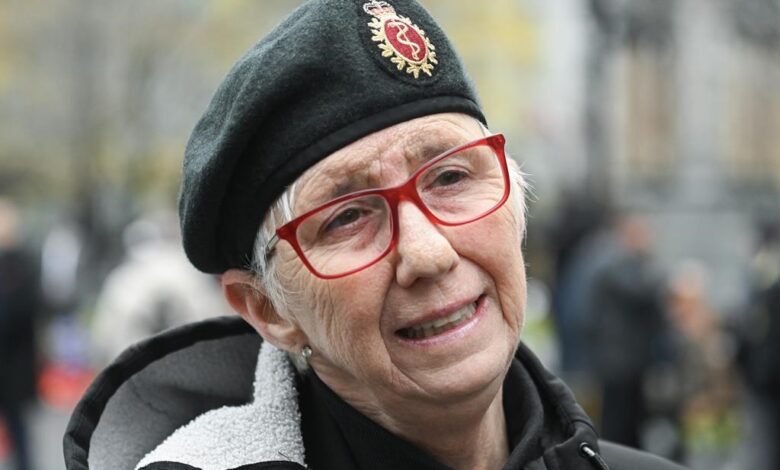
Martine Roy and fellow survivor Peggy Hayes laid a wreath for LGBTQ+ veterans at Montreal’s Remembrance Day ceremony in 2024. Roy had been arrested, interrogated and expelled from the Canadian Armed Forces in 1984 because of her sexual orientation. Four decades later, the ceremony publicly included people whom federal institutions had once systematically excluded.
Roy’s removal from the military
Roy enlisted in 1983 intending to work as a medical assistant. She was 20 when military authorities investigated her relationships with women, sent her to a psychiatrist and dismissed her under a label then used to stigmatize homosexuality. She said the experience produced shame, fear of workplace discrimination and long-lasting harm.
Her case was part of a wider policy and practice commonly called the LGBT Purge. From the 1950s into the 1990s, members of the Armed Forces, Royal Canadian Mounted Police and federal public service were surveilled, interrogated and often fired because they were suspected of being lesbian, gay, bisexual or transgender.
From exclusion to a class-action settlement
The government ended formal military discrimination in 1992, but survivors continued seeking acknowledgment and repair. Roy became a lead plaintiff in a class action that produced a settlement valued at $145 million. Prime Minister Justin Trudeau delivered a federal apology in 2017.
A settlement cannot restore lost careers or erase trauma. Its funds have supported compensation, historical work, community projects and a national monument in Ottawa. Public reporting should distinguish the total settlement framework from the amount any individual received.
Why laying a wreath mattered
Roy said Remembrance Day participation helped her reclaim recognition as a veteran and remember purge victims who had died. The wreath did not create a separate category of service; it made visible people whose service had been denied or overshadowed by the way they were expelled.
Traditional ceremonies change as historical understanding expands. Including LGBTQ+ veterans does not diminish anyone else’s sacrifice. It acknowledges that a country can honour military service while admitting that its own institutions harmed some who volunteered.
Recognition must reach current systems
Apologies and monuments are meaningful only if accompanied by accurate records, fair benefits, mental-health support and workplaces where serving members can report discrimination safely. Archives should preserve survivor testimony with consent, and museums should explain the policies rather than present the purge as a few isolated prejudices.
Young LGBTQ+ members also need evidence that promotion, health care and complaints are handled fairly. Commemoration should lead to measurable institutional learning.
A fuller meaning of remembrance
Roy went on to advocate for diversity and inclusion and was appointed to the Order of Canada in 2023. That later recognition does not cancel what happened to her at 20. It demonstrates how a person once rejected by the state helped force the state to confront its conduct.
The Montreal wreath linked military remembrance with accountability. It honoured LGBTQ+ people who served, those whose careers were destroyed and those who did not live to see an apology. Remembering them accurately requires both respect for their service and an unambiguous record of the discrimination imposed in Canada’s name.