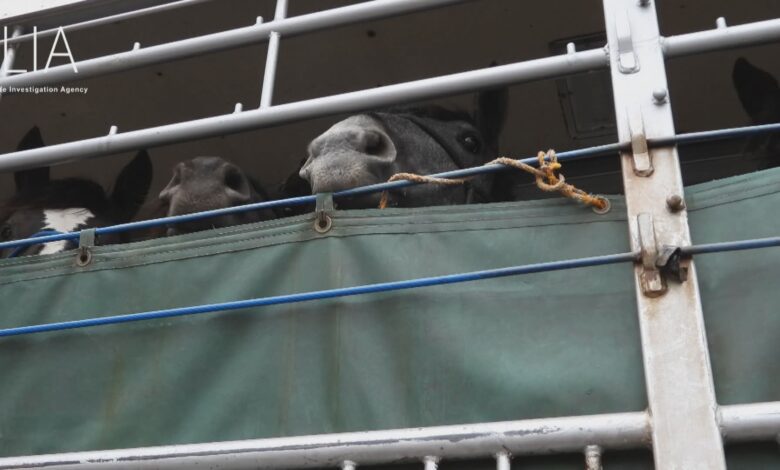
Animal-welfare organizations in Canada and Japan said official Canadian records understated deaths connected with long-distance flights of horses exported for slaughter. Their September 2024 report compared Canadian Food Inspection Agency figures with Japanese records and called for stronger oversight or an end to the trade.
The journey can exceed 28 hours
Horses are transported from Canadian farms to airports, loaded into crates and flown to Japan before further ground travel. Advocates said some animals went without food, water and rest beyond the legal time limit.
Total journey time matters, not only hours spent in the aircraft.
The reported numbers differed sharply
Animal Justice and Japan’s Life Investigation Agency cited Japanese records indicating as many as 21 horses died in one year. CFIA figures had recorded five flight-related deaths since 2013.
Different definitions and reporting periods needed reconciliation before drawing a complete national total.
Post-arrival deaths can be missed
A horse may survive the flight but die later from injury, dehydration, respiratory illness or stress. If Canadian reporting ends at landing, outcomes observed by Japanese authorities may never enter the exporter’s Canadian record.
Linked animal-level tracking would close that gap.
Shipping fever was a concern
Long confinement with heads elevated can impair horses’ ability to clear respiratory secretions. Crowding, temperature and stress can further increase illness risk.
Veterinary assessment before departure cannot guarantee what happens during or after transport.
Industry defended the system
The Canadian Equine Exporters Association said the trade was highly regulated and animals were inspected by CFIA veterinarians before leaving and again after arrival in Japan. It disputed welfare groups’ characterization.
Those assurances should be tested against complete outcome data.
Records should use common definitions
Regulators need agreement on when a death is transport-related, how long monitoring continues and who reports illness. Crate, flight and animal identifiers could connect the export certificate with destination findings.
Auditable records would protect legitimate operators as well as animals.
Enforcement depends on evidence
Inspectors require loading times, route details, temperatures, stocking density and veterinary notes to establish a violation. Penalties should reflect harm and deter repeat non-compliance.
Public summaries can disclose performance without exposing confidential commercial details.
Parliament was considering a ban
Bill C-355, which sought to prohibit air export of live horses for slaughter, had passed the House of Commons and awaited further Senate consideration. Supporters called transport inherently harmful; opponents cited rural livelihoods and existing regulation.
Legislation still required completion before becoming law.
The immediate issue was reliable surveillance
Policy cannot be credible when origin and destination authorities appear to count different outcomes. Canada and Japan could exchange timely data, mandate post-arrival monitoring and publish reconciled statistics.
The groups’ report did not by itself establish every death or legal breach, but it identified a serious reporting discrepancy. Independent verification, transparent methods and enforceable welfare standards were necessary whether lawmakers chose tighter regulation or prohibition.
Importers and airlines should preserve records long enough for regulators in both countries to investigate delayed illness and trace responsibility through the entire journey.
That evidence must remain independently inspectable.