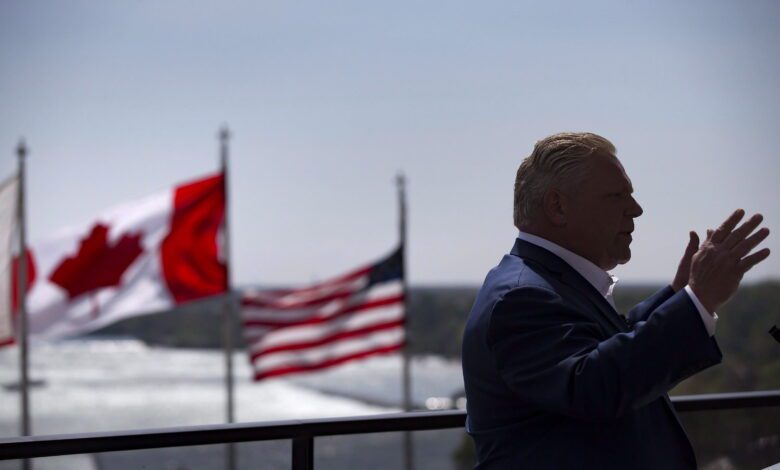
Ontario Premier Doug Ford intensified outreach to American political leaders in September 2024 as the United States presidential election approached. His government viewed state-level relationships as essential preparation for trade disputes and the scheduled 2026 review of the Canada–United States–Mexico Agreement.
Ontario’s economy is deeply integrated with the United States
Automotive, steel, agriculture and energy supply chains cross the border repeatedly. A new tariff, procurement rule or electric-vehicle policy in Washington can therefore affect factories and jobs across Ontario.
Provincial diplomacy cannot set federal trade policy, but it can explain local consequences early.
The approach targeted governors and senators
Ford said premiers have influence with counterparts who understand regional industries. Relationships with governors, legislators and business groups can create allies when national campaigns use broad protectionist language.
Outreach needed to remain useful regardless of which presidential candidate won.
A senior adviser was assigned to the effort
Ontario planned a role focused on strengthening economic and political ties with key American states. The work included monitoring policy proposals and building contacts ahead of formal continental negotiations.
Public objectives and expense reporting would help demonstrate value.
The trade agreement faced a mandatory review
CUSMA, known as USMCA in the United States, provides for a joint review in 2026. The process could renew certainty or expose disputes over market access, rules of origin and national industrial policy.
Preparation two years ahead reflected the time required to align governments and sectors.
Electric vehicles were a central concern
Large public subsidies in the United States reshaped investment decisions across North America. Ontario had attracted battery and vehicle projects and wanted Canadian policies capable of protecting an integrated production base.
A subsidy race can secure plants while imposing substantial public costs.
China policy added pressure
Canada was aligning some tariffs on Chinese electric vehicles and related products with American measures. Ford argued that failing to respond could harm domestic manufacturers.
Governments also had to consider consumer prices, retaliation and World Trade Organization obligations.
Campaign promises were not final policy
Presidential candidates frequently use sweeping trade rhetoric. Actual measures depend on Congress, agencies, courts and negotiations.
Ontario therefore needed scenario planning rather than assumptions about a single electoral outcome.
Canada speaks federally at the table
The national government conducts treaty negotiations, while provinces bring detailed knowledge of industries and regional exposure. Conflicting public messages can weaken leverage, but ignoring provincial concerns can produce unrealistic positions.
Coordination is more effective than competing missions.
Results should be measured
Useful indicators include preserved market access, resolved border bottlenecks, investment commitments and the number of policy proposals changed before adoption. A photograph with a governor is not an economic outcome.
Labour unions, municipalities and Indigenous communities should also be consulted when trade strategies affect plants, crossings or resource projects.
Ford’s push was a rational response to uncertainty because Ontario’s prosperity depends heavily on predictable cross-border commerce. Its credibility would rest on bipartisan engagement, disclosure of lobbying goals and policies that help workers and smaller suppliers adjust, not only the largest corporations. The election raised urgency, but durable relations had to outlast any one president.