
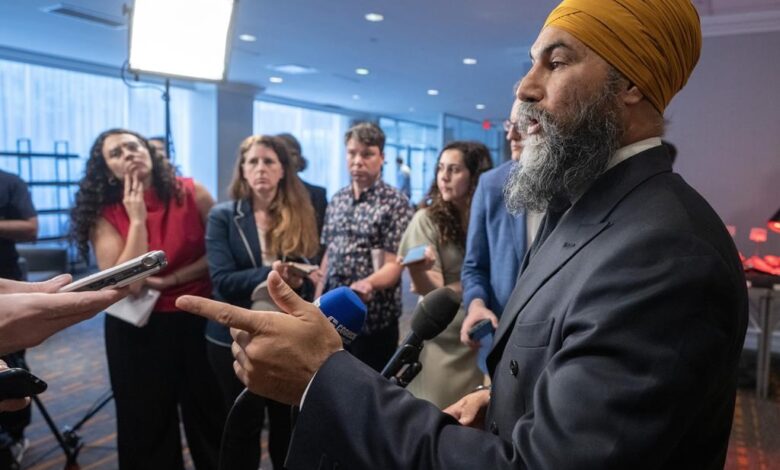
New Democratic Party leader Jagmeet Singh declined in September 2024 to say whether a future federal NDP government would retain Canada’s consumer carbon price. He promised a climate plan that would avoid placing the burden on working people and make large polluters pay more.
The answer marked growing uncertainty
The NDP had previously supported the Liberal government’s carbon-pricing system. Singh’s refusal to commit came as the party tried to distinguish itself after ending its supply-and-confidence agreement with the Liberals.
A forthcoming plan was promised, but voters did not yet have its details.
Carbon pricing changes incentives
A charge on fossil fuels makes lower-emission choices relatively cheaper and rewards efficiency. Economists often support broad pricing because it can find reductions across many activities rather than prescribe one technology.
Effectiveness depends on coverage, price and credible alternatives.
Rebates shape household impact
In provinces using the federal system, proceeds were returned largely through household payments and other programs. A family could pay at the pump while receiving more through rebates, depending on consumption and circumstances.
Public debate often discussed the charge without the corresponding payment.
Affordability concerns were real
Rural residents, renters and households without affordable transit or heating alternatives may have limited ability to change energy use quickly. Quarterly rebates do not always align with the moment bills are paid.
Policy design can provide targeted support without abandoning emissions goals.
Singh criticized a heating-oil exemption
The Liberal government had temporarily exempted home heating oil, a fuel used disproportionately in Atlantic Canada. Singh said the carve-out divided workers and weakened the fairness of the program.
Inconsistent exemptions can undermine confidence and encourage lobbying.
Large emitters already faced separate systems
Industrial carbon pricing sets performance standards for facilities and charges emissions above benchmarks. It aims to preserve incentives while limiting the risk that production moves to jurisdictions with weaker rules.
A consumer-price decision would not automatically remove industrial obligations.
Alternatives also impose costs
Regulations, subsidies and public infrastructure can reduce emissions, but taxpayers and consumers ultimately finance them. A credible plan must disclose cost per tonne, distributional effects and the timeline for results.
Calling a measure free does not eliminate its economic cost.
Conservatives and Liberals offered competing frames
Pierre Poilievre promised to abolish the consumer levy and blamed it for affordability pressures. Liberals defended pricing and rebates while accusing opponents of lacking a serious climate plan.
Singh sought space between those positions but had not yet supplied a full mechanism.
Voters needed measurable commitments
An NDP plan should identify emissions targets, policies by sector, household impacts, industrial competitiveness protections and independent progress reporting. It should explain which existing measures would remain and how any lost revenue would be replaced.
The September exchange established Singh’s priorities but not the policy. Fairness and climate effectiveness can be pursued together, yet doing so requires specific, costed tools. Until those appeared, neither supporters nor critics could judge whether the proposed alternative would reduce emissions more equitably or merely avoid an unpopular label.
Independent modelling before an election would make the eventual proposal easier to compare with the government’s current system and the Conservative alternative.



