
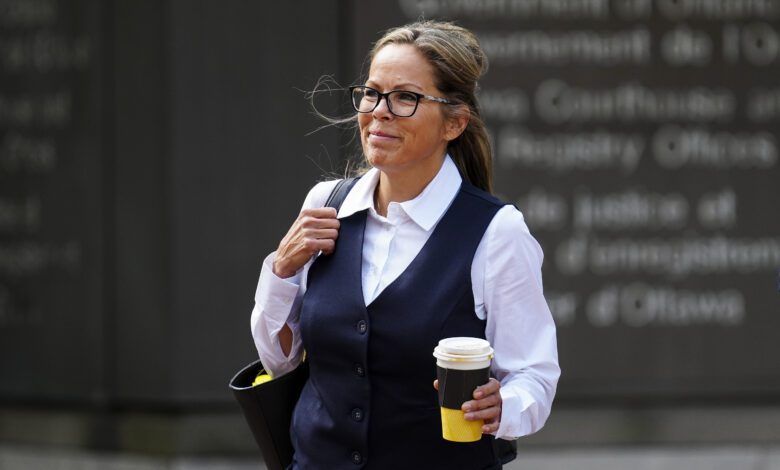
The criminal trial of 2022 “Freedom Convoy” organizers Tamara Lich and Chris Barber reached the end of evidence and argument in September 2024 after more than a year of intermittent hearings. The case asked whether their leadership of the Ottawa protest crossed from protected expression into criminal encouragement and obstruction.
The protest occupied downtown Ottawa
Truck convoys arrived in January 2022 to oppose COVID-19 vaccine mandates and broader public-health restrictions. Vehicles remained around Parliament for weeks, while residents reported persistent horns, fumes, blocked streets and disruption.
Peaceful political purpose did not automatically make every method lawful.
Lich and Barber faced multiple charges
The counts included mischief, intimidation, obstructing police and counselling offences. Barber also faced an allegation related to counselling people to disobey a court order against horn use.
Both pleaded not guilty, and the Crown bore the burden on every count.
The Crown emphasized influence and coordination
Prosecutors argued that public statements, messaging and organizational conduct encouraged participants to remain despite known effects on residents and orders to leave. They also sought to use a conspiracy framework to attribute some conduct jointly.
Leadership status alone could not replace proof of knowledge and participation.
The defence emphasized peaceful advocacy
Lawyers said their clients promoted lawful protest, cooperated in important moments and could not control every person or truck. They argued that disorder caused by others should not automatically attach to prominent organizers.
The court had to evaluate complete communications rather than isolated slogans.
Charter rights were central but not absolute
Freedom of expression, peaceful assembly and association protect unpopular political action. They do not create a general licence to block highways, damage property or prevent others from using their homes and businesses.
The legal task was to separate expressive conduct from proven criminal acts.
The trial greatly exceeded its original estimate
Proceedings began in September 2023 and continued through disputes over evidence, disclosure and admissibility. A long record reflected the scale of digital messages, videos and legal issues.
Duration alone did not show that either side was right or that the process was unfair.
The Emergencies Act was not the charge
Separate litigation examined the federal government’s invocation of emergency powers. Lich and Barber’s trial concerned their individual criminal responsibility under the Criminal Code.
Political arguments about the government’s response could not decide whether prosecutors proved these counts.
Closing arguments were not a verdict
After counsel summarized their interpretations, the judge needed time to review a large body of evidence and apply the law. There was no jury.
Reporting the trial as “wrapped” meant submissions had ended, not that guilt had been determined.
The judgment would define the boundary
The case had importance beyond the defendants because future protest organizers need to know when encouragement, coordination and prolonged disruption create criminal liability. A rule too broad could chill dissent; one too narrow could leave communities without protection.
The court’s responsibility was not to approve or condemn the convoy’s politics. It was to decide specific charges using admissible evidence, Charter principles and the presumption of innocence.



