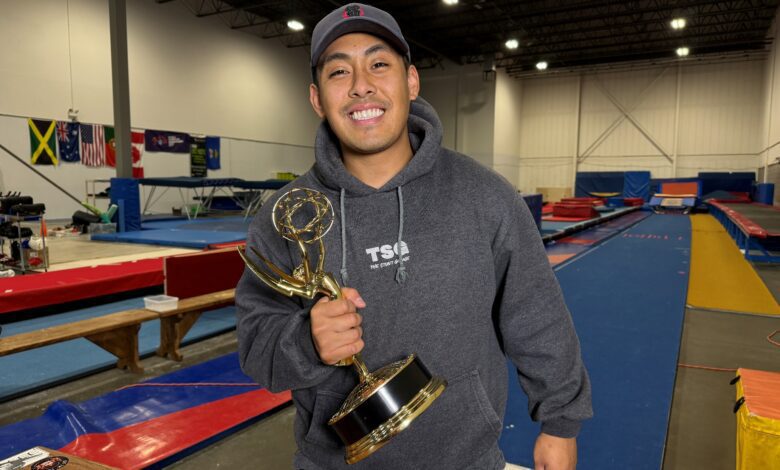
Edmonton stunt performer Martin Cochingco reached a career milestone in September 2024 when the television drama Shōgun won the Emmy for outstanding stunt performance. The award recognized an ensemble whose carefully rehearsed work helped make the historical series feel dangerous without losing control of safety.
The award belonged to a coordinated team
Cochingco shared the honour with Hiroo Minami, Nobuyuki Obikane and Johnson Phan. The category recognizes stunt coordination and performance rather than a single spectacular moment, reflecting the planning, timing and trust required across an entire sequence.
For Cochingco, the recognition also connected a major international production to Alberta’s screen community.
A freezing scene demanded repeated preparation
The nominated work included a physically demanding sequence filmed in Langley, British Columbia. Cochingco said the performers trained for more than three days before shooting and completed 13 takes in cold conditions.
Repetition on that scale is not improvisation. Every fall, strike, reaction and camera position must remain readable while performers protect themselves and one another.
Stunt work combines acting with risk management
A convincing fight requires more than athletic ability. Performers must communicate character, match the director’s visual language, hit precise marks and reproduce movements for multiple camera angles.
Protective equipment, rehearsals and specialist supervision reduce risk, but they do not make the work effortless. Cold weather can affect grip, mobility and concentration, increasing the importance of disciplined resets between takes.
Shōgun depended on physical credibility
The FX series, set in feudal Japan and adapted from James Clavell’s novel, used detailed production design, costumes and action to build its world. Its stunt performers had to serve that historical tone rather than make combat look like a modern action spectacle.
The result helped the audience follow power, fear and consequence inside each confrontation.
Cochingco built experience across major productions
His screen credits included Avatar: The Last Airbender, The Last of Us, Yellowjackets and Deadpool & Wolverine. Each production demanded a different movement vocabulary, from grounded survival to stylized fantasy and superhero action.
That range illustrates why stunt careers depend on continuous training as well as professional relationships.
The pandemic brought him back to Edmonton
Cochingco returned to Edmonton in 2020, when COVID-19 disrupted film production and travel. He continued working as the industry resumed, demonstrating that a performer can maintain national and international credits while remaining connected to a home market.
His Emmy became a visible example for other Alberta artists considering screen careers.
Awards can strengthen a regional industry
One trophy does not automatically create studios or permanent jobs. It can, however, show producers that skilled crew and performers live in the region. That reputation matters when companies compare locations, incentives and available talent.
Cochingco said he hoped the recognition would encourage more filmmaking in Edmonton.
The achievement was collective
Stunt departments work with actors, camera teams, armourers, wardrobe, visual-effects specialists, medics and assistant directors. Safe execution depends on all of them understanding the plan and having authority to stop when conditions change.
The Emmy therefore celebrated both the performers visible on screen and the production culture that allowed difficult action to be captured responsibly.
Cochingco’s win was a personal breakthrough, but its wider meaning was practical: an Edmonton artist helped deliver one of television’s most acclaimed physical performances through preparation, collaboration and repeatable craft. The danger appeared spontaneous to viewers because the team had worked so methodically behind the camera.