
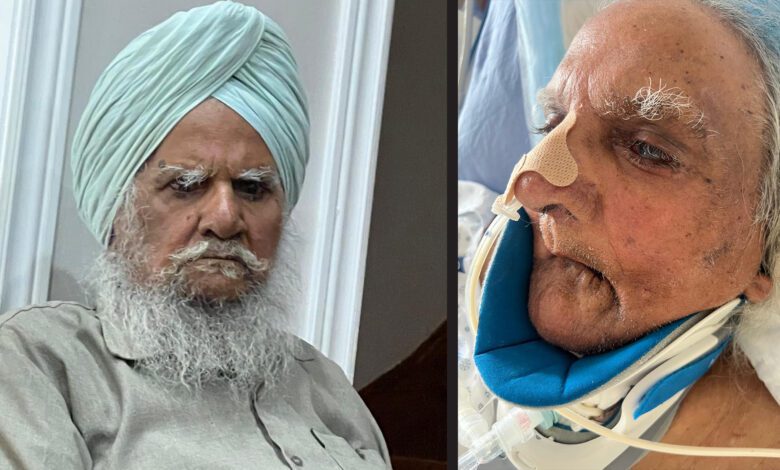
William Osler Health System opened an investigation after 85-year-old Sikh patient Joginder Singh Kaler had his beard shaved at Brampton Civic Hospital in August 2024 despite his family refusing permission. The World Sikh Organization said the act violated his faith and caused profound distress during an already serious medical crisis.
Kaler was unable to consent
He had suffered a major fall and underwent reconstructive surgery for a fractured jaw at Toronto’s St. Michael’s Hospital. He was later transferred to Brampton Civic while unconscious and could not make the decision himself.
His beard had remained intact through the earlier jaw procedure.
The family said it expressly refused
According to advocates, hospital staff contacted relatives seeking permission to shave him. The family declined because maintaining uncut hair was a central religious obligation for Kaler, yet they later found that the beard had been removed.
No medical necessity had been explained to them publicly at the time.
Uncut hair has religious significance
Kesh, the practice of maintaining unshorn hair, is one of the articles of faith for initiated Sikhs and an important observance for many others. A beard is therefore not merely a grooming preference that staff can treat as disposable.
Removing it can affect identity, dignity and spiritual wellbeing.
Clinical necessity and convenience are different
Emergency care may sometimes require altering hair to protect life or safely perform a procedure. When there is time to ask, clinicians should explain the specific need, alternatives and consequences to the patient or lawful substitute decision-maker.
Routine convenience does not justify overriding a clear refusal.
The hospital promised a comprehensive review
Osler said patient privacy prevented it from discussing individual details but that it was investigating under standard processes and collaborating with external care partners. It affirmed respect for religious and cultural practices.
A meaningful review would establish who decided, what was documented and why the refusal failed to govern care.
The WSO sought accountability and prevention
Spokesperson Balpreet Singh said the incident damaged trust across the Sikh community and called for continuing training and awareness. Training should include practical escalation steps, not only general statements about diversity.
Staff need to know whom to contact when a clinical plan conflicts with a faith practice.
Consent should be visible across transfers
Patients moving between hospitals are vulnerable to lost context. Electronic charts and bedside handovers can flag religious requirements, substitute decision-makers and explicit refusals so each new team does not start from incomplete information.
Such flags require privacy safeguards and confirmation rather than stereotyping.
Accommodation starts with questions
Hospitals should not assume that every Sikh patient observes practices identically. Asking the patient or family, involving spiritual-care advisers and considering reversible alternatives respects individual choice.
The same process helps patients from many faith and cultural communities.
Restoring trust requires more than an apology
The family deserved a timely explanation, preservation of records and a remedy proportionate to what occurred. The public also needed evidence that policies, handovers and accountability had changed.
Kaler entered hospital unable to protect his own wishes; that made the institution’s duty stronger, not weaker. The case became a test of whether patient-centred care includes the whole person. Medical treatment and religious dignity should not be treated as competing concerns until every safe accommodation has genuinely been considered.



