
Why is Ye, Formerly Kanye West, Doing a Show in China?
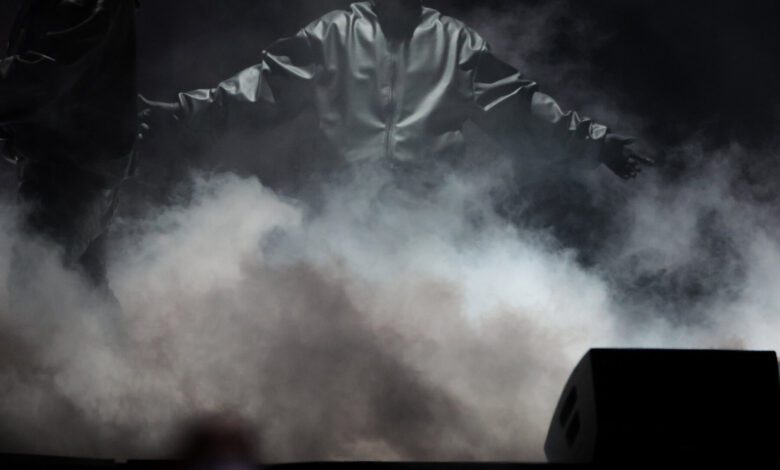
Ye, the American musician formerly known as Kanye West, staged a listening event at Wuyuanhe Stadium in Haikou on September 15, 2024. The approval surprised observers because Chinese regulators had previously blocked some Western acts and Ye had generated repeated controversy abroad, yet local officials saw a major tourism opportunity.
The performance was a rare return
Ye had performed in Beijing and Shanghai in 2008 but had not held a major show in mainland China for 16 years. The Haikou event was presented as the China stop of a world-tour listening experience associated with the Vultures albums and Ty Dolla Sign.
It took place during the Mid-Autumn Festival holiday.
China scrutinizes foreign performances
Concert organizers generally submit performers, lyrics, recordings and production details for government approval. Artists including Bon Jovi and Maroon 5 had previously lost planned shows after controversies or perceived political sensitivities.
Approval for one event did not mean censorship rules had disappeared.
Ye’s public record made the decision notable
Brands and partners had distanced themselves after his antisemitic remarks and other offensive statements. Fans in China also filed complaints about allowing the performance, while supporters argued that his music and personal controversies should be considered separately.
The episode exposed the selective and sometimes opaque nature of cultural approvals.
Haikou was pursuing a concert economy
Hainan authorities had been attracting large entertainment events to increase spending on hotels, restaurants, shopping and transport. Choosing the island capital rather than Beijing or Shanghai let Haikou market itself as a tourism destination.
Businesses offered discounts and packages aimed at visiting fans.
The show delivered measurable demand
Local reporting said all 42,000 tickets sold quickly, with far more people joining a waiting list. Haikou’s tourism bureau later attributed about 51 million yuan in ticket sales and 373 million yuan in tourism revenue to the event.
Such official economic-impact figures should be read with their methodology and attribution.
A typhoon made the timing more consequential
Typhoon Yagi had recently damaged Hainan, and the arrival of concert visitors provided a short-term boost during recovery. Hotel occupancy reportedly approached 90 per cent around the performance.
An event can support commerce while the wider costs of a disaster remain much larger.
The trip also carried personal history
Ye lived in Nanjing for about a year when he was 10 while his mother, Donda West, taught at Nanjing University through a Fulbright programme. Before the concert he shared a childhood photograph with a message announcing his return.
That connection gave the visit a narrative beyond a routine tour stop.
The event was closer to a listening experience
Promoters used language associated with an album listening party rather than a conventional concert. The distinction mattered to expectations about live vocals, staging and the balance between new recordings and older songs.
After strong demand, a second Haikou date was arranged for September 28.
Economics best explains the apparent exception
No public evidence established one definitive reason regulators approved Ye. The combination of local tourism policy, large consumer demand, an approved production plan and his childhood link to China offers the strongest documented explanation.
It would be inaccurate to claim that officials endorsed his past statements or broadly relaxed cultural controls. Haikou authorized a commercially valuable, tightly managed event. Its success illustrated how economic pressure could create room for an artist who still appeared an unlikely fit within China’s closely supervised live-entertainment system.



