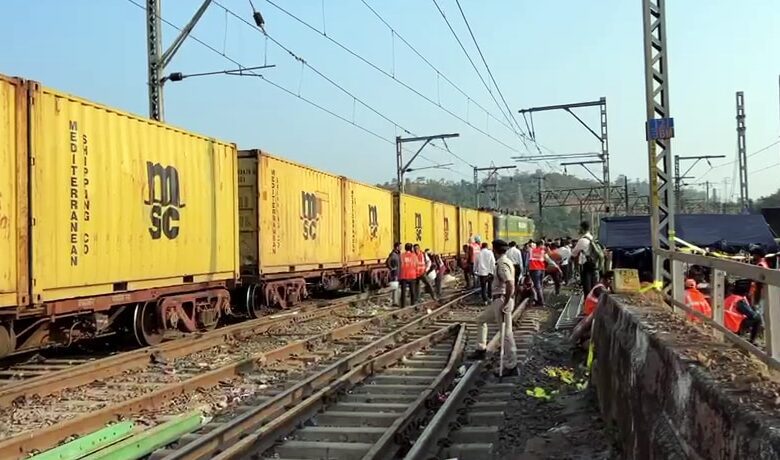
Three wagons of an automobile-carrying freight train derailed between Misrod and Mandideep stations near Bhopal on September 16, 2024. The incident blocked one of three tracks on the busy corridor, but railway officials said the other two lines remained available and major disruption was avoided.
The derailment occurred after midday
West Central Railway placed the event at about 12:45 p.m. The train was carrying vehicles from Delhi toward Bengaluru when three wagons left the rails.
No passenger coaches were involved, and initial reporting did not identify injuries.
The location was south of Bhopal
Misrod and Mandideep lie on the route toward Itarsi, a major railway junction. Heavy passenger and freight traffic uses this central Indian corridor.
A blockage there can affect services well beyond the immediate stations if restoration is prolonged.
Two tracks remained functional
Officials said the middle and down lines continued carrying trains while crews worked on the affected track. Operations could be routed with caution, limiting delays.
Early descriptions that traffic was “affected” did not mean the entire route was closed.
Senior railway teams reached the site
Engineering and operations personnel began lifting wagons, inspecting track and preparing restoration. The initial target was to complete work by the evening.
Forecast completion times are operational estimates and should be updated from official notices.
Recovery involves more than rerailing
Crews must stabilize rolling stock, check rails, sleepers, points and overhead systems, remove damaged material and confirm safe geometry. A trial movement or speed restriction may follow before normal operation resumes.
Rushing reopening can create a second incident.
The cause required investigation
Potential factors in any freight derailment include track condition, wheel or axle failure, loading, braking and operational error. No specific cause should be assigned without technical findings.
Photographs and witness impressions cannot substitute for inspection records and data.
Automobile cargo created handling challenges
Vehicle-carrying wagons have specialized structures and valuable cargo. Recovery teams need to prevent fuel leaks, fire or further movement while protecting vehicles and workers.
The environmental risk is different from a tanker carrying hazardous chemicals.
Passenger information still mattered
Even when most trains continue, dispatching changes can cause short holds, platform changes or cascading delays. Railways should publish verified diversions and restoration status through official channels.
Travellers should check train-specific information rather than assume cancellation from social posts.
The limited impact was not the end of accountability
Maintaining traffic on two lines demonstrated network redundancy and rapid response. Investigators still needed to determine why the wagons derailed and whether maintenance or operating changes were required.
The accurate immediate account was therefore measured: three freight wagons left the track, one line was temporarily affected, restoration began and the remaining tracks kept the corridor functioning. Any stronger claim about cause, negligence or complete closure would have gone beyond the available evidence.
A subsequent technical report should identify the point of derailment, damage sequence and maintenance history. Publishing corrective actions would help railway workers, freight customers and passengers understand whether the event was isolated or revealed a recurring risk. Near misses and low-impact derailments deserve scrutiny precisely because they offer safety lessons without mass casualties.