Trudeau’s Liberal Party Loses Parliament Seat in Montreal Special Election
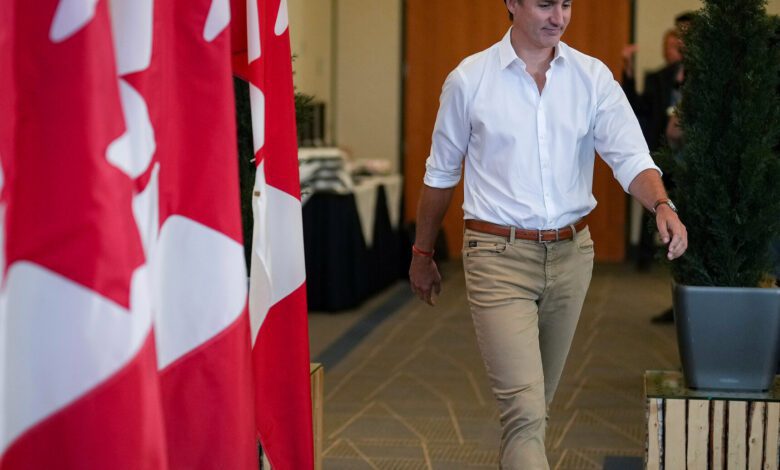
The Bloc Québécois captured LaSalle—Émard—Verdun in a September 2024 special election, ending the Liberal Party’s longstanding hold on the southwest Montreal seat. The result became a national test of Justin Trudeau’s standing because it arrived after another stronghold fell in Toronto.
The vacancy followed David Lametti’s departure
Lametti, a former federal justice minister, resigned after being removed from cabinet in 2023. The Liberals selected Montreal councillor Laura Palestini to defend a riding they had held since its creation and whose predecessor districts were usually Liberal.
Local nomination controversy complicated an already difficult campaign.
The contest attracted an extraordinary ballot
A record number of candidates ran, many connected to an electoral-reform protest that sought to demonstrate the unwieldiness of a large ballot. Voters still produced a close contest among the Bloc, Liberals and New Democrats.
Minor candidacies collectively mattered in a race decided by hundreds of votes, but their voters cannot be reassigned hypothetically to one party.
Louis-Philippe Sauvé won narrowly
Final Elections Canada figures recorded 8,925 votes for Sauvé and 8,656 for Palestini, a margin of 269. The Bloc received 28.2 per cent, Liberals 27.3 per cent and NDP 26.1 per cent.
The closeness showed a divided electorate rather than an overwhelming realignment.
The NDP also challenged Liberal dominance
Craig Sauvé, another Montreal councillor unrelated to the Bloc winner, made the race genuinely three-sided. The NDP hoped that breaking its parliamentary agreement with the Liberals would establish greater independence.
A third-place finish by a small margin provided encouragement but no additional Commons vote.
The Bloc read the result as momentum
Winning in a diverse urban constituency allowed the party to argue that its Quebec-nationalist appeal could expand. It also strengthened Blanchet’s negotiating position as the Liberal minority sought support on confidence matters.
One byelection could not establish a province-wide wave.
Liberals faced a leadership question
After the Toronto—St. Paul’s defeat, another loss in a core city intensified debate about Trudeau’s ability to lead the next campaign. Ministers publicly supported him, while MPs and organizers considered what the result said about voter fatigue.
A leader is chosen under party rules, not directly by a byelection electorate.
Turnout limits direct projection
Special elections usually mobilize fewer voters and allow greater attention to local candidates. A general election brings national campaigns, wider turnout and different strategic choices.
The result was meaningful evidence of vulnerability, not a mathematical forecast.
The seat changed hands without changing government
Adding one Bloc MP did not remove Liberal confidence in the House. It did make every partnership more politically visible after the NDP ended automatic support.
The durable lesson was competitive pluralism: voters who once consolidated behind Liberals divided almost evenly among three centre-left or Quebec-focused alternatives. Any party claiming the riding in a future election needed to build a coalition larger than 28 per cent.
Accurate coverage should preserve the official margin, the local context and the limited constitutional effect. The symbolic shock was real precisely because the practical result was so narrow.