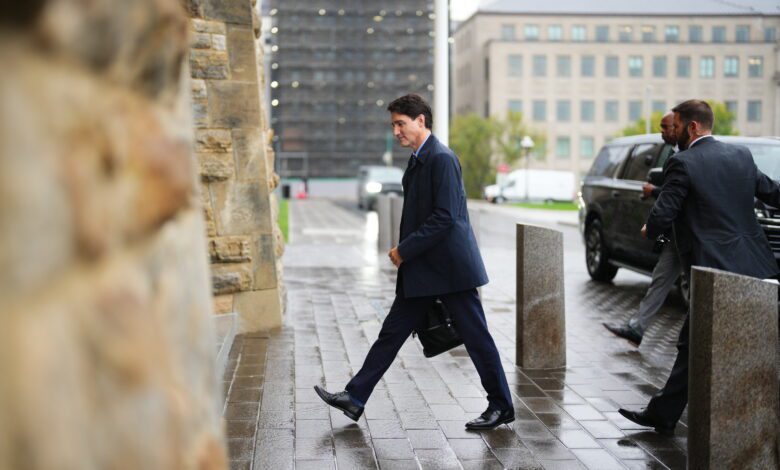
Prime Minister Justin Trudeau attended the 19th Francophonie summit in France on October 4 and 5, 2024, where leaders discussed conflict, democratic stability, economic cooperation and the future of French in a digital world. Escalation in Lebanon and the wider Middle East formed an important part of the diplomatic agenda.
France hosted the summit after 33 years
Heads of state and government met first at Villers-Cotterêts and then in Paris. The gathering’s theme—creating, innovating and doing business in French—connected cultural and linguistic cooperation with employment, technology and trade.
The International Organisation of La Francophonie includes countries with very different levels of French use, political systems and regional interests. A shared language does not imply a single position on security or human rights.
Lebanon brought urgency to the meeting
Israel had intensified operations against Hezbollah, begun a ground incursion in southern Lebanon and exchanged fire across the border. Iran’s October 1 missile attack on Israel increased fears of a wider regional war.
Francophone leaders called for de-escalation and addressed the situation along Lebanon’s southern border. Any diplomatic statement also had to recognize civilian protection, international humanitarian law and the security concerns of people on both sides.
Haiti remained a central Francophone crisis
Armed groups, political instability and displacement had severely weakened public services in Haiti. Trudeau discussed international support and governance with counterparts during the summit.
Assistance is most credible when Haitian institutions and civil society shape priorities. External security support cannot by itself create legitimate government, functioning courts or long-term economic opportunity.
Canada held several bilateral meetings
Trudeau met leaders including Vietnam’s Tô Lâm, Armenia’s Nikol Pashinyan, Belgium’s Alexander De Croo and Côte d’Ivoire’s Alassane Ouattara. Such meetings allow trade, security and diaspora concerns to be addressed outside the main declaration.
Canada also supported the Armenia-Azerbaijan peace process and discussed other geopolitical pressures affecting Francophone members. Bilateral contact is a diplomatic opportunity, not proof that a dispute has been resolved.
Artificial intelligence raised a language question
Leaders examined whether French and its regional varieties would be well represented in artificial-intelligence systems. Models trained disproportionately on English material can perform unevenly or flatten cultural differences.
Expanding French-language data must still respect copyright, privacy, consent and community control. Digital inclusion also requires affordable connectivity and tools that work outside wealthy markets.
Canada announced targeted funding
Ottawa committed $16 million for education, health, women and girls and community initiatives in Francophone African countries. Another $1.6 million supported French-language research, student mobility, youth employment and digital cultural content.
Announcements should be followed through recipient details, disbursements and measured results. A summit figure does not show by itself whether funds reached the intended communities.
Membership expanded
Ghana and Cyprus became full members of the organization. Angola, Chile, Nova Scotia, French Polynesia and Germany’s Saarland were admitted as observers.
Broader membership can extend cultural and diplomatic reach, while also raising questions about the level of French use and the democratic standards expected of governments. The organization must apply its principles consistently if expansion is to add credibility.
The summit mixed symbolism with practical work
Leaders approved declarations and agreed that Cambodia would host the next summit in 2026. Parallel business and innovation events connected companies and institutions across the Francophone world.
The October meeting could not settle wars or guarantee the future of French online. Its value depended on what followed: sustained diplomacy, accountable programmes and willingness to defend rights when politically inconvenient. For Canada, the agenda joined language and culture with crises that required concrete action beyond ceremonial solidarity.