
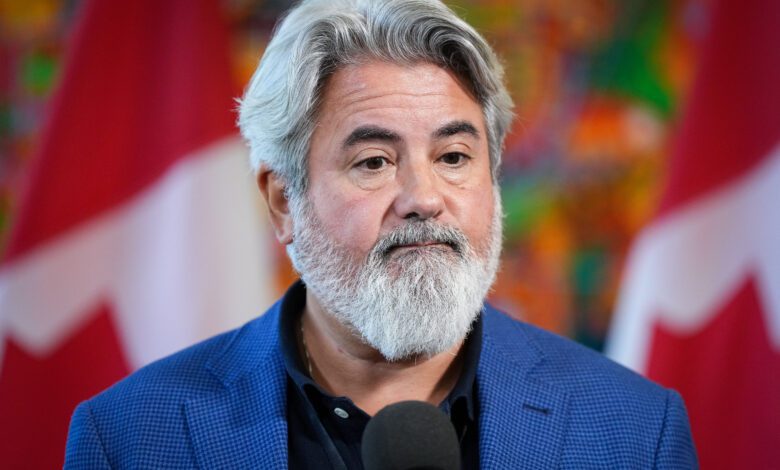
Federal Transport Minister Pablo Rodriguez prepared in September 2024 to leave Prime Minister Justin Trudeau’s cabinet and seek the leadership of the Quebec Liberal Party. The move shifted a senior federal politician toward a provincial party trying to recover from its 2022 election defeat.
Rodriguez held two influential federal roles
Along with the transport portfolio, he served as the federal government’s Quebec lieutenant, helping communicate regional political concerns inside cabinet. His departure therefore created both a ministerial vacancy and a gap in Trudeau’s Quebec organization.
The formal announcement followed several days of public speculation.
He resigned on September 19
Rodriguez confirmed that he would leave cabinet and the federal Liberal caucus. He continued as the member of Parliament for Honoré-Mercier while sitting as an independent as he prepared his provincial leadership campaign.
Leaving caucus reduced conflicts between federal discipline and a separate provincial contest.
The parties are organizationally distinct
Despite sharing the Liberal name, the Liberal Party of Canada and Quebec Liberal Party are separate political organizations. A federal minister could not simply be installed as provincial leader; Rodriguez had to enter and win the Quebec party’s process.
Members, rules, finances and policy positions belong to the provincial party.
Quebec Liberals were rebuilding
Dominique Anglade resigned after the party won 21 seats in the 2022 provincial election and finished with a historically weak share of the popular vote. The party retained strength among anglophone and allophone voters but needed to broaden support among francophones and outside Montreal.
A leadership race offered visibility but did not resolve that structural challenge.
Federal experience was an asset and a liability
Rodriguez brought cabinet experience, name recognition and political organization. Opponents could also connect him to an increasingly unpopular federal government and scrutinize his record in transport, heritage and government communications.
Leadership voters had to judge whether federal prominence could translate into provincial renewal.
The move affected Trudeau’s cabinet
A replacement transport minister and Quebec lieutenant were required as the minority government faced confidence votes and recent by-election losses. Cabinet changes can alter who carries files, but departments continue through the public service and formal transfer of responsibility.
Rodriguez’s resignation did not itself trigger a federal by-election because he retained his Commons seat.
A candidacy was not a victory
Early coverage needed to distinguish an expected bid, formal entry, eligibility under party rules and the eventual leadership vote. Other candidates could offer different ideological and regional approaches.
Polls of the general public were not the same as votes by eligible party members.
The central choice was provincial
Quebec Liberal members faced questions about language policy, the economy, public services, federalism and the party’s identity after long periods in government. Rodriguez’s relationship with Ottawa was relevant but only one part of that decision.
Accurate reporting should therefore avoid portraying the move solely as a Trudeau cabinet drama. It was also an attempt to reposition a major Quebec party, with consequences for the provincial opposition and the governing Coalition Avenir Québec.
The September transition established Rodriguez’s intention and federal departure. His campaign promises, financing, membership support and later result required separate reporting rather than being assumed from his cabinet résumé.



