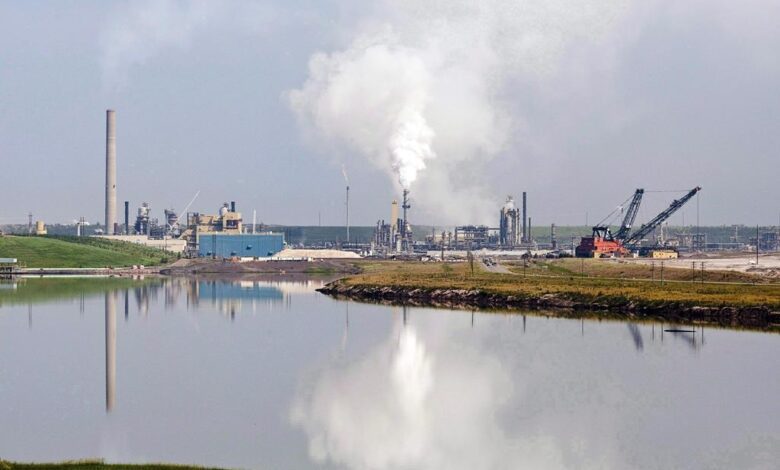
Canada’s major oilsands producers sharply reduced public discussion of their climate plans after new Competition Act provisions on environmental claims took effect in June 2024. The silence did not reduce their emissions or obligations, the Pembina Institute argued; it changed the contest over how companies substantiate public promises.
The law targeted unsupported claims
Bill C-59 amended competition law to address misleading environmental representations. Businesses making claims about a product’s environmental benefit or about protecting the environment were expected to support them with adequate and proper testing or internationally recognized methodology, depending on the claim.
Enforcement details and the meaning of methodology prompted uncertainty.
Pathways Alliance removed material
The consortium represents six large producers: Canadian Natural Resources, Cenovus, ConocoPhillips Canada, Imperial, MEG Energy and Suncor. It removed website and social-media content, saying the amendments created significant uncertainty and liability risk.
Members maintained that work toward net-zero production emissions by 2050 continued.
Silence is not evidence of either progress or failure
Deleting advertisements does not prove that projects stopped, but neither does a private assurance verify that investment, construction or emissions reductions occurred. Credible assessment requires spending, timelines, permits and independently measured results.
Public reporting can be factual without relying on promotional slogans.
Production and emissions trends matter
Oilsands output had continued to grow, and the sector remained a major source of Canada’s greenhouse-gas emissions. Companies improved emissions intensity in some periods, but total emissions can rise when production grows faster than per-barrel reductions.
Both absolute and intensity measures should be disclosed.
The proposed carbon-capture network was central
Pathways promoted a large carbon-capture, transport and storage system as its principal route to deep reductions. Such a project requires enormous capital, regulatory approvals, operating energy and long-term storage monitoring.
Announcements should be separated from final investment decisions and tonnes actually captured.
The think tank questioned investment priorities
Pembina said member companies were increasing spending on production while capital devoted to emissions reductions remained insufficient for stated targets. The industry argued that fiscal and regulatory certainty was required before committing to the shared network.
Both positions can be tested against audited expenditures and project milestones.
Competition law is not climate regulation
Rules against deceptive marketing can improve the quality of claims, but they do not set an emissions cap or require a company to build carbon capture. Climate outcomes depend on federal and provincial regulation, carbon prices, technology and market demand.
Greenwashing enforcement and emissions policy serve different functions.
Better disclosure is the constructive response
Companies can publish historical emissions, accounting boundaries, assumptions, capital committed and progress against dated targets, with independent assurance. Regulators should provide clear guidance so accurate reporting is not chilled.
The key conclusion is that avoiding public claims cannot substitute for cutting pollution. Equally, a quiet website alone does not demonstrate that no work occurred. Transparent, comparable data is the bridge between legal caution and public accountability, allowing Canadians to judge whether the oilsands sector’s investments match its net-zero promise.
Governments can reinforce that accountability by publishing facility-level emissions and clear rules for corporate transition claims. Investors, workers and nearby communities then can compare promised reductions with actual performance instead of choosing between advertising and silence.