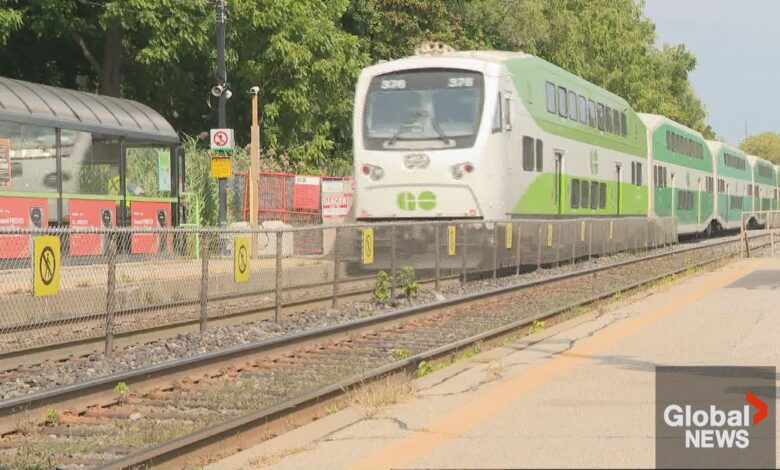
Manal Srouji remained in hospital a month after suffering life-threatening injuries when a GO train struck her at Long Branch station in Etobicoke on September 17, 2024. The 46-year-old mother of two said she could not sit up in bed and faced a long rehabilitation involving injuries to her legs, pelvis and other parts of her body.
What authorities established
Toronto police said a woman walking near the platform edge was struck at approximately 8:15 a.m. and taken to hospital. Police opened an investigation and, as of the October report, had laid no charges.
Srouji did not remember the incident. She said her son had been told that her backpack became caught on a passing express train, but that account had not been publicly confirmed by investigators. It should remain identified as second-hand information, not a settled cause.
Life after the collision
Srouji was bedridden and dependent on clinical care for basic movement. She described patience, prayer and support from her sons, colleagues and people she had not known before the incident as central to coping.
Recovery from multiple traumatic injuries can involve surgeries, pain management, physiotherapy, occupational therapy and psychological support. Timelines differ, and public encouragement should not create pressure to demonstrate rapid progress.
A busy station under construction
Long Branch was undergoing work connected with GO Expansion. Srouji and other passengers raised concerns about crowding, particularly after schools resumed and more employees returned to workplaces in September.
Construction can temporarily narrow circulation or change familiar routes. A proper safety review needs measured platform capacity, pedestrian flow, train speed, sightlines, announcements and the placement of barriers—not conclusions based only on impressions.
Metrolinx’s response
Metrolinx said it performs an internal investigation whenever an incident occurs on the rail network. It said passing trains were operating at reduced speeds during construction and additional staff had been deployed at Long Branch.
Srouji questioned reliance on staff supervision alone. Human monitoring can intervene and guide passengers, but engineering controls may offer more consistent protection where a hazard can be designed out.
Possible layers of prevention
Transit agencies can assess warning-line visibility, tactile surfaces, platform width, temporary fencing, one-way routes, train announcements and how express services pass waiting passengers. Platform screen doors are a major infrastructure option and are not simple to add to every existing station.
Any proposal must account for accessibility, emergency evacuation, different train configurations and construction staging. The goal is a layered system in which one distracted moment does not automatically become catastrophic.
Care for witnesses and workers
Srouji expressed concern for passengers, including children, who witnessed the collision. Witnesses, train crews and first responders can experience trauma and should be offered timely, confidential support.
Public reporting should avoid graphic description and speculation. Safety lessons can be examined without turning an injured person’s worst day into spectacle.
The road ahead
A colleague organized fundraising to help Srouji’s family while she was unable to work. Crowdfunding can address immediate costs, but donors should verify the organizer and recognize that long-term rehabilitation may require workplace benefits and public programmes.
Srouji said she hoped to return to her work and former life. The fairest account preserves both determination and uncertainty: she survived severe injuries, the cause remained under investigation, and her call for stronger safeguards deserved a transparent technical response from the transit agency.