
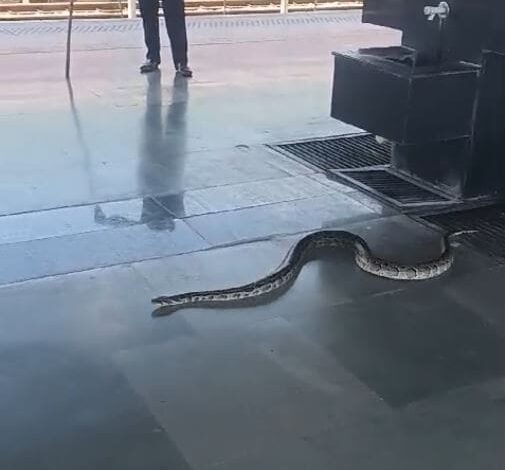
A roughly six-foot snake moving across a platform at Yog Nagari Rishikesh railway station in Uttarakhand startled passengers in September 2024 and generated a widely shared video. People moved away quickly, and reports said the animal was later removed without a reported bite.
The clip showed understandable alarm
A large snake appeared among travellers and luggage in an unfamiliar built environment. Sudden running can create a secondary crowd hazard, especially near platform edges and tracks.
The safest immediate response is to keep distance, alert railway staff and leave the animal an escape route.
Online labels did not establish the species
Posts and reports alternately described the reptile as a python or simply a large snake. Video angle, motion and image quality may be insufficient for reliable identification.
Only a trained local rescuer or wildlife official examining diagnostic features should identify species and venom risk.
People should not attempt capture
Handling with sticks, throwing objects or surrounding a snake increases the chance of a defensive strike and can injure a protected wild animal. Even non-venomous species can bite, while visual misidentification is common.
Station personnel should establish space and contact authorized wildlife responders.
A bite requires medical care
If bitten, the person should move away, remain as still as practical, remove tight jewellery and reach a hospital urgently. Cutting, sucking, icing, electric shocks and tight tourniquets can worsen injury.
A photograph taken from safety may assist clinicians, but nobody should pursue or kill the snake for identification.
Railway sites can attract wildlife
Vegetation, drains, stored materials, rodents and nearby river or forest habitat can bring snakes into stations. Rishikesh sits near the Himalayan foothills and the Ganges, where urban infrastructure meets diverse wildlife.
One sighting does not prove unusual infestation or negligence.
Prevention focuses on habitat management
Closing entry gaps, managing waste and rodents, clearing risky clutter and training staff can reduce encounters. Platforms still need shade and ecological sensitivity, so indiscriminate chemical treatment or habitat destruction is not an appropriate response.
Emergency contacts and crowd procedures can be posted for staff.
Viral footage often loses context
Reposts may omit location, date, rescue outcome or the fact that nobody was harmed. Sensational captions can encourage fear and deliberate killing of snakes far beyond the specific event.
Publishers should verify the original clip and avoid adding an unconfirmed species name.
The event was dramatic but manageable
Passengers had reason to move away, yet the response did not require panic. Distance, calm communication and professional removal protect people and wildlife better than improvised heroics.
The useful public-safety lesson from the Rishikesh video is simple: create space, control the crowd, call trained responders and treat any bite as a medical emergency. Virality should not convert a brief wildlife encounter into misinformation about snakes or the station.
Rail authorities could document the responder, species identification and release location when available. That small factual follow-up would replace frightened speculation with a complete account and help conservation officials identify repeated entry points without encouraging harassment of wildlife.



