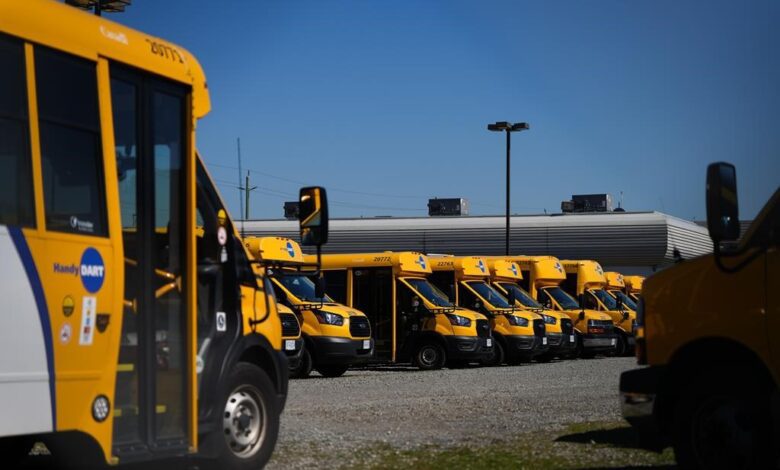
More than 600 Metro Vancouver HandyDART workers ended an 18-day strike after their union reached a tentative agreement with operator Transdev on September 20, 2024. Regular service was expected to resume while members prepared to vote on the proposed collective agreement.
HandyDART serves passengers with disabilities
The door-to-door service transports people who cannot independently use conventional buses, SkyTrain or SeaBus for some or all trips. Transdev operated it under contract to TransLink, while drivers, dispatchers, mechanics and other staff were represented by Amalgamated Transit Union Local 1724.
That contractor structure divided responsibilities among employer, transit authority and public funder.
The dispute had developed over months
Workers authorized strike action in June and used limited job action before a full stoppage began on September 3. The union highlighted wages, turnover, staffing, working conditions and growing reliance on taxis to fulfil trips.
Transdev said its proposals had to reflect service and funding constraints.
Only some essential journeys continued
During the full strike, the parties maintained transportation for specified life-sustaining medical care, including dialysis and certain cancer and multiple-sclerosis treatments. Many other work, education, shopping and social trips were cancelled.
The exception showed how difficult it is to divide mobility into “essential” and optional categories.
Riders carried the greatest immediate cost
People who depended on accessible vehicles had to rearrange appointments, seek help from relatives or pay for alternatives that did not always meet their needs. Isolation and missed daily activities can have health consequences even when they are not classified as emergencies.
Labour reporting should therefore include riders as well as negotiators.
The tentative deal stopped the disruption
The union announced that an agreement had been reached after intensive bargaining and described gains on wages and other priorities. It did not immediately publish every term before presenting the package to members.
A tentative agreement is not a final contract until the represented workers ratify it.
Members subsequently approved it
ATU Local 1724 later reported a successful ratification vote. The union said the contract addressed wage disparity with conventional transit, worker retention and concerns about service contracting.
Claims about improvement should ultimately be evaluated against the signed language, retention data and service performance over the contract’s life.
The taxi issue affected quality and jobs
Taxis can add capacity when a dedicated HandyDART vehicle is unavailable, but riders and workers raised questions about accessibility training, reliability and the diversion of work from the core service. TransLink had to balance flexible capacity with consistent standards.
Transparent data on trips, missed pickups, complaints and subcontracting would make that balance easier to assess.
The settlement did not end the policy debate
Metro Vancouver’s ageing population and accessibility obligations were likely to increase demand. Stable staffing, adequate funding and reliable scheduling remain necessary regardless of who operates the vehicles.
The strike ended because the employer and union found terms members were willing to accept. The lasting test was whether the agreement reduced turnover and improved safe, dependable mobility for riders—not simply whether vehicles returned to the road the next morning.