China Launched a Rocket With a Dummy Warhead Into the Pacific
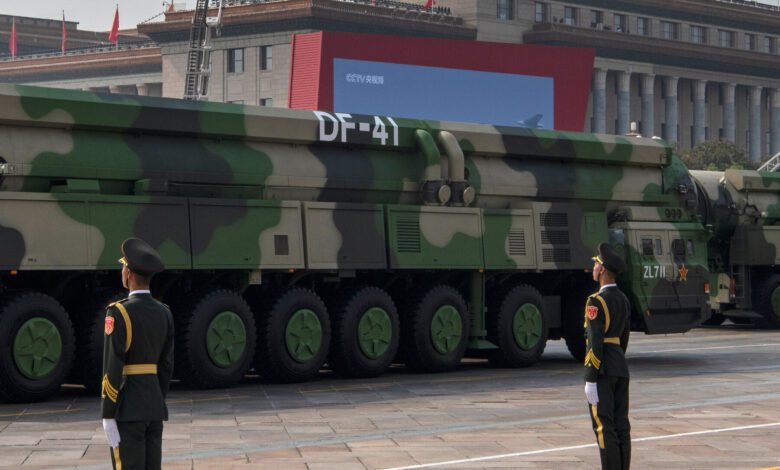
China’s People’s Liberation Army Rocket Force launched an intercontinental ballistic missile carrying a dummy warhead into the Pacific on September 25, 2024. Beijing announced that the missile landed in an expected area, making the rare open-ocean test a significant strategic signal.
The warhead was not nuclear
China’s defence ministry explicitly described a dummy warhead. The launch tested a delivery system and did not involve a nuclear detonation.
That distinction prevents alarmist reporting while recognizing that intercontinental missiles are central to nuclear deterrence and can carry strategic weapons.
The missile entered international waters
Officials said the projectile fell into designated high seas in the Pacific, without publicly identifying the exact landing zone. Launch notices and tracking allowed other countries to assess the trajectory.
Open-ocean flight provides range and performance data not available from shorter tests within national territory.
Beijing called it routine training
The ministry said the event was part of an annual training plan and was not directed at a particular country or target. China also said relevant countries were notified in advance.
Official intent claims should be reported as claims; military signalling can serve training and political purposes simultaneously.
The public format was unusual
China had not openly announced this kind of Pacific ICBM test in decades, with analysts pointing to a 1980 DF-5 launch as the last comparable event. Most later tests used domestic ranges.
The rarity increased international attention even if technical preparations were routine for the force.
Regional states watched closely
Japan, the Philippines, Australia, New Zealand and Pacific island countries had reasons to seek notification and environmental assurance. A long-range flight can cross or approach areas important to aviation and shipping.
Transparent notices reduce accident risk but do not remove strategic concern.
The test demonstrated readiness
An ICBM launch can assess command procedures, propulsion, staging, guidance and re-entry performance. A successful result supports confidence that the force can operate beyond controlled test corridors.
Outside observers could not verify every Chinese performance claim from the public statement alone.
It occurred amid nuclear modernization
China was expanding and modernizing its nuclear forces while the United States and Russia maintained much larger arsenals. The trajectory of growth intensified calls for strategic dialogue and risk reduction.
Comparisons need both warhead numbers and delivery systems rather than treating one launch as the entire balance.
Restraint and communication remained essential
Missile tests are conducted by several nuclear-armed states, but misunderstanding can escalate when communication is weak. Hotlines, pre-launch notices and discussions of doctrine can lower that risk.
The verified event was a rare, publicly disclosed ICBM test with an inert payload. It was neither a nuclear attack nor an insignificant space launch, and accurate coverage needed to hold both facts at once.
Future analysis should rely on confirmed tracking and official notifications before assigning a missile type or exact range. Premature technical identification can convert plausible inference into false certainty, especially when governments release only a short statement and no telemetry.
Independent experts should label estimates clearly and revise them when better evidence emerges.