
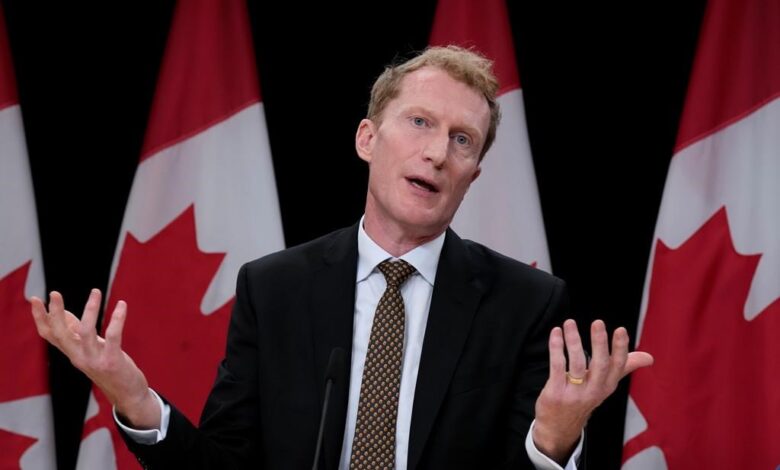
Canada’s immigration minister Marc Miller said in September 2024 that a rising number of international students were making refugee claims after entering on study permits. He called the pattern alarming and raised the possibility that some applicants had used education as a route into Canada without a genuine study plan.
The minister described a programme-integrity concern
Study-permit applicants must normally show acceptance by an eligible institution, adequate finances and an intention to leave when their authorized stay ends. A later refugee claim can prompt questions about what the person intended when applying.
It does not automatically prove that the original application was fraudulent.
Refugee law assesses risk at the time of the claim
Conditions in a person’s country can deteriorate after arrival, or an individual may disclose persecution only after reaching safety. Canadian law allows eligible claimants to present evidence to the Immigration and Refugee Board.
A study permit neither guarantees refugee protection nor disqualifies a person from seeking it.
Preliminary data showed a real increase
Federal information later recorded about 11,630 claims by people holding approved study permits or extensions between January and August 2024. Another release counted 12,915 claimants in related study-permit categories over a slightly later reporting period.
Different dates and definitions explain why figures in public discussion did not always match.
The share of students remained comparatively small
Canada hosted a much larger population of international students, most of whom did not claim asylum. Government briefing material later acknowledged the increase while saying the proportion of students making claims was small.
Raw totals should therefore not be used to characterize an entire group as deceptive.
Schools and recruiters also shaped the system
Rapid enrolment growth, high international tuition and uneven oversight created incentives for institutions and agents to market education as a pathway to work or permanent residence. Students sometimes arrived with unrealistic promises about jobs, housing or immigration options.
Integrity measures should examine recruitment and institutional conduct as well as individual applications.
A terrorism case prompted the interview question
Miller’s comments followed a question about Muhammad Shahzeb Khan, a Pakistani national charged in the United States with an alleged plot against a Jewish centre in New York. Canadian officials had said he entered on a student visa.
His criminal allegations could not establish anything about refugee claimants generally, and guilt required adjudication in court.
Claims require timely, individual decisions
Long backlogs harm people with genuine protection needs and also delay removal after rejected claims. Adequate decision-makers, legal assistance, interpreters and reliable country evidence help distinguish cases without collective suspicion.
Applicants must tell the truth, while government must provide fair hearings and reasoned decisions.
Policy should separate evidence from rhetoric
Canada could verify school attendance, improve data sharing, regulate recruiters and investigate documented misrepresentation. It could also preserve access to asylum for someone facing persecution, torture or comparable danger.
The increase deserved investigation, but “student” and “refugee claimant” are procedural categories, not verdicts on character. A credible response would publish consistent data, enforce rules against proven fraud and protect the individualized refugee process that Canadian and international law require.



