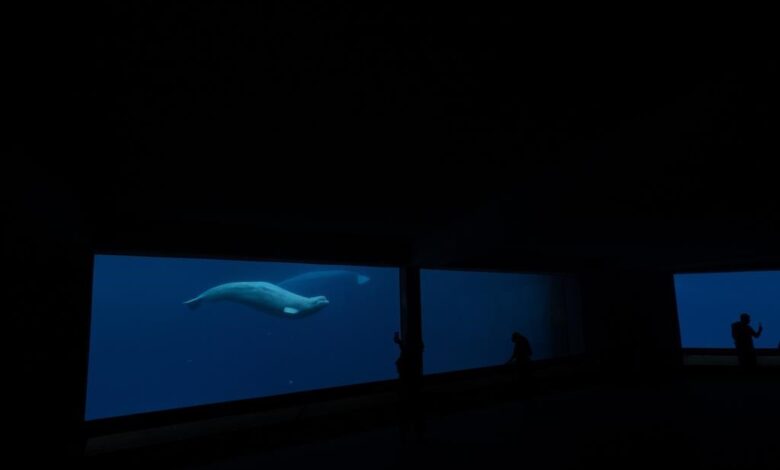
A beluga whale died at Marineland in July 2024, the fourth beluga death reported at the Niagara Falls attraction within a year. The death intensified questions about animal welfare and about how little Ontario had disclosed from an investigation that began in 2020.
A mounting number of deaths
Provincial records reviewed by The Canadian Press showed that 16 belugas and one killer whale had died at Marineland since 2019 by the time of the October report. Three of five belugas transferred from the park to Mystic Aquarium in Connecticut in 2021 had also died.
A count establishes the seriousness of the issue but does not establish one cause for every animal. Age, disease, individual medical history, environment and treatment records must be assessed separately.
Ontario’s investigation
Animal Welfare Services, part of the Ministry of the Solicitor General, began investigating Marineland in 2020. In 2021, the province found all marine mammals at the park in distress because of poor water quality and issued orders to address the problem.
Marineland denied that its animals were in distress and appealed before later dropping the appeal. The park has consistently said it prioritizes animal health and has a strong welfare record.
By October 2024, the ministry said its officers had conducted more than 200 inspections. It did not explain in detail what the inspections found, which orders remained in force or the cause of the latest beluga’s death.
Transparency efforts met legal barriers
A freedom-of-information request sought inspection reports, orders and a government-commissioned assessment of water conditions. Ontario initially withheld the records under law-enforcement, legal-privilege and privacy exemptions.
The province later agreed to release some material, including hundreds of pages and copies of orders, but Marineland appealed disclosure decisions. Mediation failed and the matter moved toward adjudication.
Some confidentiality can be legitimate during an active investigation or when veterinary and personal information is involved. However, a multiyear inquiry also needs public reporting sufficient to show whether orders are enforced and animals are protected.
Later clarification did not answer every question
In November 2024, Ontario’s chief animal welfare inspector said that, to her understanding, marine-mammal deaths at the park were not related to water quality and that recent work had brought water issues under control.
That statement addressed one suspected factor; it did not supply a cause of death for each whale or close the broader debate about care. Responsible coverage must not convert “not attributed to water quality” into “no welfare concern.”
The park faced an uncertain future
Marineland had been listed for sale, and owner Marie Holer died in September 2024. The park said a succession plan existed but did not publicly detail what would happen to the animals if the property changed hands.
Moving belugas is itself a complex welfare decision requiring suitable receiving institutions, federal permits, transport planning and veterinary assessment. Transfer should not be presented as risk-free or assumed to be the only safe outcome.
What accountability requires
Ontario can protect investigative integrity while publishing aggregate inspection findings, active orders, compliance deadlines, mortality reviews and final outcomes when proceedings end. Marineland can strengthen confidence by releasing veterinary explanations where lawful and independently verifiable.
The July death was real, and the pattern warranted scrutiny. What remained unknown was equally important. Reporting should press for answers without assigning an unproven cause, treating an allegation as a conviction or overlooking the individual welfare decisions required for the surviving animals.