Brandenburg State Elections: What to Watch For
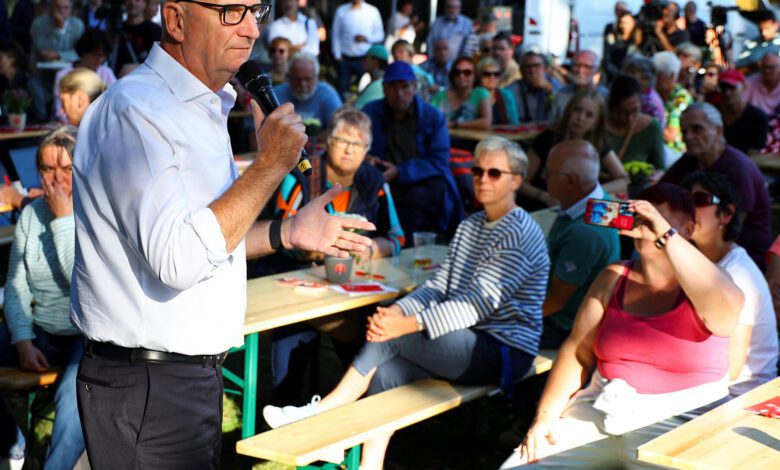
Brandenburg voted for a new state parliament on September 22, 2024, in a contest watched far beyond the eastern German state. Polls placed the far-right Alternative for Germany close to or ahead of the governing Social Democrats, while a new party disrupted the coalition arithmetic.
Voters cast two ballots
Brandenburg uses a mixed electoral system. One vote selects a local constituency candidate and the other supports a party list, with the list vote primarily determining each party’s proportional share of seats.
Overhang and compensatory rules can change the final size of the Landtag from its nominal membership.
A threshold limited smaller parties
Parties generally needed at least five per cent of list votes to receive proportional seats, although winning a direct mandate could provide another route under state rules. This placed the Greens, Left Party, Free Democrats and smaller groups under intense pressure.
Votes below the threshold affect the majority calculation even when they yield no seats.
Dietmar Woidke made the election personal
The Social Democratic premier had governed Brandenburg since 2013 and said he would resign if the AfD finished ahead of his party. That pledge encouraged tactical voting by people who preferred another party but wanted to block an AfD victory.
It also risked concentrating support at the expense of potential coalition partners.
The AfD sought its second eastern breakthrough
Weeks earlier, the party had placed first in Thuringia and a close second in Saxony. Brandenburg’s AfD organization was classified by the state domestic intelligence agency as a suspected right-wing extremist case.
The classification and criticism of candidates did not prevent the party from attracting voters angry over migration, energy costs and government performance.
BSW changed the available coalitions
The Sahra Wagenknecht Alliance combined left-wing economic positions with restrictive migration rhetoric and opposition to aspects of German military support for Ukraine. It entered its first Brandenburg campaign polling in double digits.
Because established parties rejected cooperation with the AfD, BSW could become pivotal even without finishing near first.
National parties had much at stake
Chancellor Olaf Scholz was an SPD member of parliament for a Potsdam constituency, but Woidke largely kept him away from the campaign. Scholz’s federal coalition with the Greens and Free Democrats was deeply unpopular.
A state result could intensify national leadership pressure without directly changing the federal government.
The outcome validated the close-race warnings
The SPD finished first with 30.9 per cent, narrowly ahead of the AfD on 29.2 per cent. BSW received 13.5 per cent, while the Christian Democrats won 12.1 per cent and several established parties failed to enter the Landtag.
Turnout reached a post-reunification state-election high of 72.9 per cent.
Coalition arithmetic followed the vote
The SPD held 32 seats, the AfD 30, BSW 14 and CDU 12 in an 88-seat parliament. Woidke eventually formed an SPD–BSW coalition and remained premier.
The pre-election questions were therefore well founded: tactical voting kept the AfD from first place, smaller-party failures narrowed options and a new party became a governing partner. This article’s distinct lesson is procedural—understanding two votes, thresholds and coalition exclusions was essential to understanding why a 1.7-point lead reshaped the government.