
Live Updates: Hezbollah Retaliates With Missile Strikes Against Israel
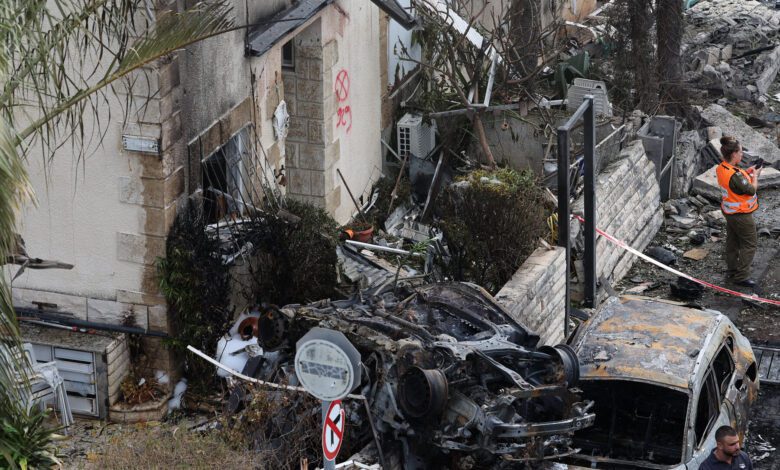
Hezbollah fired its deepest sustained rocket barrage of the Israel–Lebanon border conflict toward northern Israel on September 22, 2024, including attacks it said targeted the Ramat David air base near Haifa. Israel intercepted some projectiles and struck sites in Lebanon as both sides moved closer to full-scale war.
The target lay well beyond the immediate border
Ramat David is more than 30 miles from Lebanon and hosts Israeli Air Force operations. Hezbollah said it used Fadi-series rockets in response to Israeli attacks, including the Beirut strike that killed senior commander Ibrahim Aqil and other members of its elite Radwan force.
Israel did not report decisive damage to the base.
Warning sirens reached the Haifa area
Residents entered shelters across parts of the Lower Galilee and northern coastal region. Israeli medical services reported several people injured, including through debris or while moving to protected spaces.
Initial injury counts changed and did not establish that every casualty was struck directly by a Hezbollah warhead.
Israel struck launchers and other sites
The Israeli military said aircraft attacked Hezbollah launch infrastructure in southern Lebanon. It described its operations as defensive efforts to stop rocket fire and permit evacuated northern residents to return.
Hezbollah disputed Israeli targeting narratives, and individual strikes still required assessment for civilian harm and military necessity.
The barrage followed an Israeli strike in Beirut
Israel killed Aqil on September 20 during a meeting in a densely populated southern suburb of Beirut. Lebanese authorities reported civilians among those killed when the building was hit.
Israel said Aqil helped plan attacks; Hezbollah confirmed his death and promised retaliation.
Exploding communications devices had already raised tensions
Days earlier, pagers and radios used by Hezbollah members exploded across Lebanon, killing and wounding combatants and civilians. The coordinated operation was widely attributed to Israel, although Israeli officials initially avoided a full public account.
The indiscriminate effects and civilian setting generated serious legal and humanitarian questions.
Cross-border fire began after October 7
Hezbollah started attacks in declared support of Hamas after the Gaza war began. Israel responded with artillery and air strikes. The exchanges killed civilians and fighters and displaced tens of thousands on both sides of the boundary.
Solidarity or self-defence claims did not exempt either party from the laws of armed conflict.
Retaliation created an escalating cycle
Each side presented its attack as an answer to the other’s previous action. That logic expanded the range, weapons and targets without creating a stable stopping point.
Deterrence can fail when opponents interpret restraint as weakness and escalation as proof that more force is required.
Civilian protection required more than interception
Sirens, shelters and missile defence reduced risk in Israel but could not eliminate it. Lebanese civilians also needed warnings, medical access and protection from attacks in populated areas.
The September 22 missile fire was a significant escalation, but claims about targets and effectiveness belonged to the belligerents unless independently verified. Preventing a wider war required an end to unlawful attacks, enforcement of security arrangements along the border and diplomacy connected to a Gaza ceasefire. The following day’s much larger Israeli campaign showed how little margin remained.



