
In Germany, Scholz’s Party Ekes Out Win Over Far Right
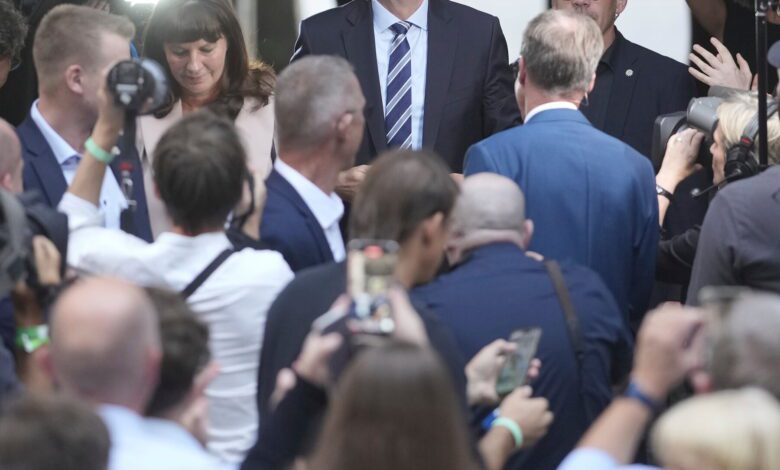
Germany’s Social Democratic Party narrowly retained first place in Brandenburg’s state election on September 22, 2024, denying the far-right Alternative for Germany another regional victory. The result gave Chancellor Olaf Scholz’s party relief, although the campaign’s strongest local figure was Brandenburg premier Dietmar Woidke.
The SPD finished 1.7 points ahead
Final results gave the Social Democrats 30.9 per cent of the vote and the AfD 29.2 per cent. Turnout reached 72.9 per cent, the highest in a Brandenburg state election since German reunification.
A narrow plurality determined first place but did not allow the SPD to govern alone.
Woidke personalized the race
The SPD had governed Brandenburg since 1990, and Woidke warned that he would step down if the AfD won. He kept an intentional distance from the unpopular federal coalition and built the campaign around his state record.
Polling indicated that many SPD voters were motivated by preventing an AfD victory rather than broad enthusiasm for the national party.
The AfD nevertheless made major gains
The party followed its first-place result in Thuringia and second-place finish in Saxony with another strong performance. Germany’s domestic intelligence authorities had scrutinized parts of the AfD, and other major parties ruled out governing with it.
Exclusion from coalitions did not erase the votes it received or the need to address voters without adopting extremist claims.
Scholz received only limited protection
Brandenburg surrounds Berlin, and Scholz lived in Potsdam and represented a constituency in the state. A loss would have intensified questions about whether he should lead the SPD into the next federal election.
Woidke’s locally focused win could not be treated as a personal endorsement of Scholz.
Federal coalition partners performed poorly
The Greens and Free Democratic Party failed to clear the threshold for seats in the state parliament. Their weakness underscored the national coalition’s disputes over budgets, migration, climate measures and economic policy.
The newly formed Sahra Wagenknecht Alliance won a substantial share, further fragmenting the party system.
Seat arithmetic required a new coalition
The SPD won 32 seats, the AfD 30, the Sahra Wagenknecht Alliance 14 and the Christian Democrats 12. With no party close to a majority, negotiations produced an SPD–BSW coalition, and Woidke was re-elected premier in December 2024.
That agreement kept the AfD out of government while giving a new populist party significant influence.
The national political crisis continued
Scholz’s three-party federal coalition later collapsed, and Germany held an early election in February 2025. The centre-right CDU/CSU finished first, the AfD second and the SPD recorded a historically weak result.
That later outcome confirmed that Brandenburg’s state result had not reversed national dissatisfaction.
The election carried two messages
The SPD demonstrated that a well-known regional leader could still mobilize tactical and loyal voters against the far right. The AfD demonstrated durable strength in eastern Germany even without coalition partners.
Describing the result only as a Scholz victory would miss both points. It was a narrow state-level success achieved under local conditions, followed by difficult coalition building. Democratic parties still faced the larger task of responding to economic insecurity, migration concerns and distrust while refusing racism, historical distortion and attacks on constitutional institutions.



