
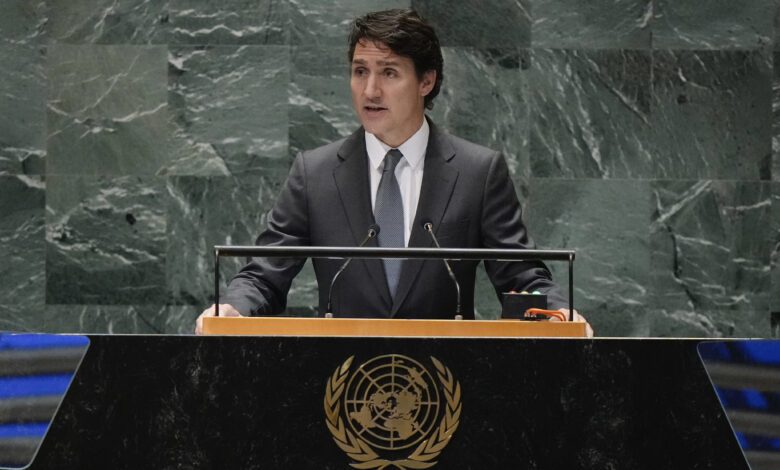
Canadian Prime Minister Justin Trudeau put Haiti’s overlapping security, humanitarian and political crises on the agenda at the United Nations in New York on September 23, 2024. He met Haitian Prime Minister Garry Conille and joined a high-level meeting of the UN Economic and Social Council’s Ad Hoc Advisory Group on Haiti.
The meeting sought an immediate international plan
Trudeau urged governments and institutions to coordinate serious support for Haitians facing gang violence, hunger, displacement and failing public services. The discussion took place alongside the 79th session of the UN General Assembly.
Canada chaired the ECOSOC advisory group, giving it a convening role but not authority to impose a settlement on Haiti.
Haiti’s transitional authorities were rebuilding institutions
Conille had been appointed by a Transitional Presidential Council formed after Prime Minister Ariel Henry agreed to resign. The transition was intended to restore functioning government and prepare credible elections after years without nationally elected leadership.
Political progress remained fragile because insecurity limited movement, administration and public participation.
Armed groups controlled much of the capital
Gangs controlled large parts of Port-au-Prince, attacked police stations and public buildings, blocked roads and disrupted access to food and health care. Residents faced killings, kidnappings and sexual violence, while hundreds of thousands had been displaced.
National statistics and control estimates varied over time, so they should be tied to the reporting period rather than treated as fixed.
A Kenya-led security mission had begun deploying
The UN Security Council authorized a Multinational Security Support mission in October 2023 at Haiti’s request. The first Kenyan officers arrived in June 2024 to assist the Haitian National Police, but the mission remained below its planned staffing and funding.
Security assistance required clear command, human-rights safeguards and accountability for misconduct as well as personnel and equipment.
Canada supported a Haitian-led approach
Trudeau said solutions had to be led by Haitians and reaffirmed Canadian help for restoring peace and security. Canada had funded humanitarian relief, policing and other assistance and imposed sanctions on people it accused of supporting corruption or armed groups.
External support can create space for recovery, but it cannot substitute for legitimate Haitian institutions.
Leaders highlighted the mission’s resource gap
Trudeau and Conille emphasized that international partners needed to close investment shortfalls affecting the multinational mission. Equipment, logistics, medical capacity and predictable financing were necessary if the deployment was to support police operations sustainably.
Funding should be reported as committed, disbursed or delivered so the public can distinguish promises from operational capacity.
Humanitarian needs went beyond policing
Restoring security was essential for aid delivery, schools, hospitals and livelihoods, but force alone could not resolve food insecurity, displacement or weakened governance. UN officials called for simultaneous humanitarian, development and political action.
Assistance also needed to reach local organizations and protect women, children and other people exposed to heightened violence.
Progress required transparent benchmarks
Useful measures included safer transport corridors, functioning hospitals and schools, protection of displaced people, police accountability and a credible electoral timetable. Public reporting could show whether international programmes improved daily life rather than merely holding meetings.
The New York discussions acknowledged that Haiti’s crisis demanded urgent attention and sustained partnership. Their value would depend on whether countries converted statements into reliable funding, rights-respecting security support and long-term investment under Haitian civilian leadership. Haitians needed safety and humanitarian relief immediately, while democratic recovery required institutions capable of earning public trust.



