
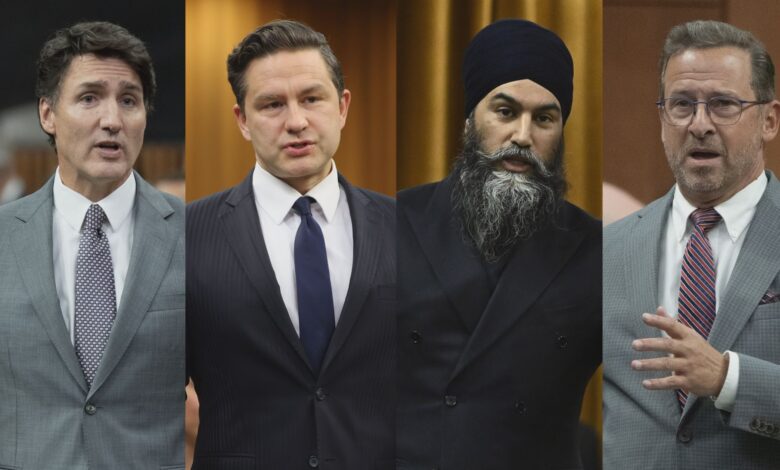
Canada’s Conservatives used an opposition day on September 24, 2024 to table an explicit motion declaring that the House of Commons had no confidence in Prime Minister Justin Trudeau and his Liberal government. The attempt followed the NDP’s withdrawal from its supply-and-confidence agreement but was expected to fail.
A minority government must retain confidence
The Liberals lacked a majority of seats and needed support or abstentions from other parties on confidence matters. If the House clearly withdrew confidence, constitutional convention would normally require the prime minister to resign or seek an election.
Not every government defeat is automatically a confidence loss.
This motion removed ambiguity
The Conservative text directly stated that the House had no confidence in the prime minister and government. Debate was scheduled for Tuesday, with the vote expected on September 25.
Because the language was explicit, MPs and voters could understand the consequence.
The NDP agreement had ended
Jagmeet Singh terminated the arrangement that had supported the Liberals on confidence votes in return for progress on agreed policies. Ending it made parliamentary outcomes less predictable but did not commit New Democrats to support every Conservative motion.
The NDP said it would decide votes case by case.
The Bloc also withheld support
Bloc Québécois leader Yves-François Blanchet said his party would vote against the first motion while negotiating measures it considered beneficial for Quebec. He left open the possibility of supporting a later attempt.
With both the Bloc and NDP opposed, the Conservative motion lacked the numbers to pass.
Opposition days give non-government parties agenda time
The government normally controls most Commons business, but designated supply days allow opposition parties to choose a motion for debate. That mechanism provides scrutiny and can expose where parties stand.
Using it for confidence was a legitimate parliamentary tactic, even when defeat was likely.
A failed vote would not grant new confidence indefinitely
Surviving one motion meant the government could continue, but future budgets, spending votes or explicit motions could test confidence again. A minority Parliament is sustained vote by vote.
Fixed election-date legislation did not prevent an earlier election following a confidence loss.
Public opinion did not determine the vote directly
An Ipsos poll for Global News found 56 per cent of respondents preferred parties to work with the government rather than trigger an immediate election. Polls inform political strategy but MPs make the parliamentary decision.
Survey wording, sample and timing should accompany any percentage.
The motion was defeated as expected
On September 25, the House rejected it 211 votes to 120. The result preserved the Liberal government while confirming that the former NDP agreement had been replaced by case-by-case bargaining.
The important distinction was between political vulnerability and an actual confidence defeat. The Conservatives demonstrated their readiness for an election; the NDP and Bloc demonstrated independence from both major parties. Parliament continued because a majority of voting MPs declined to bring the government down on that motion, not because the Liberals had regained a majority mandate.
That distinction prevents routine parliamentary manoeuvring from being reported as an election before the decisive vote occurs.



