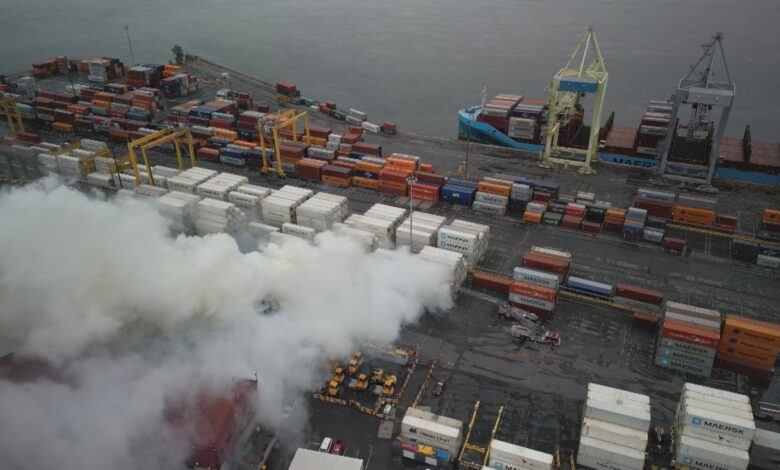
Firefighters battled a container fire involving approximately 15,500 kilograms of lithium-ion batteries at Montreal’s Racine marine terminal on September 23, 2024. Authorities issued a precautionary shelter notice for nearby residents, monitored the smoke and reported that tests found no toxic exposure risk to the public.
The fire began inside port cargo
Emergency records placed the incident near Bossuet and Notre-Dame streets. A large quantity of batteries in a container created sustained heat and difficult access.
Port operations require cargo declarations so responders know what hazards and extinguishing strategy they face.
Lithium-ion fires behave differently
Damaged or overheated cells can enter thermal runaway, releasing energy and igniting neighbouring cells. Re-ignition may occur after visible flames subside.
Responders often use substantial cooling and extended monitoring rather than assuming a conventional quick knockdown is final.
Residents were told to remain indoors
The city issued a preventive notice in part of Mercier–Hochelaga-Maisonneuve while smoke was assessed. Closing windows and ventilation can reduce exposure during an uncertain plume.
Precaution does not mean toxicity was confirmed; it manages risk before measurements are available.
Air tests allowed the warning to end
Montreal said monitoring detected no toxicity in the smoke plume and lifted the notice around 10:30 p.m. The fire response continued after the immediate public danger was ruled out.
Environmental records also identified potential contact with surface infrastructure and water, requiring follow-up beyond air.
The cause remained under investigation
A battery can fail through damage, defect, improper charge, packaging or an external fire. The public record did not justify selecting one explanation immediately.
Investigators needed shipping documents, container condition and physical evidence.
Transport rules are critical prevention
Battery state of charge, terminal protection, packaging, labelling and separation help contain incidents. Misdeclared or damaged cargo can deprive carriers and ports of necessary controls.
Enforcement should target evidence of non-compliance rather than treat all battery shipments as unsafe.
Communication influenced trust
Nearby residents saw a large plume and needed timely information about area, duration and protective actions. Officials should explain monitoring results and remaining environmental checks, not simply announce “no danger.”
Multilingual alerts improve response in diverse neighbourhoods.
The incident offered a safety lesson
Electrification increases movement and storage of lithium-ion cells, making specialized training and infrastructure more important. Ports need isolation areas, water management, thermal monitoring and coordinated emergency plans.
Montreal’s response contained this fire without a confirmed public toxic exposure. A transparent cause investigation and implementation of lessons would determine whether the next incident could be detected and controlled even faster.
Firefighters also needed reliable inventories before opening or moving a container, because water, damaged cells and trapped gases can create secondary hazards. Port workers should be trained to isolate abnormal heat or smoke and keep evacuation routes clear. After-action reports could examine alert timing, runoff containment and coordination between municipal, environmental and port authorities. Publishing non-sensitive lessons would help other Canadian terminals prepare.
Regular multi-agency emergency drills would test whether the detailed written plans actually worked under sustained real-world operational pressure.