
In Rare Graft Case in Singapore, Former Minister Pleads Guilty
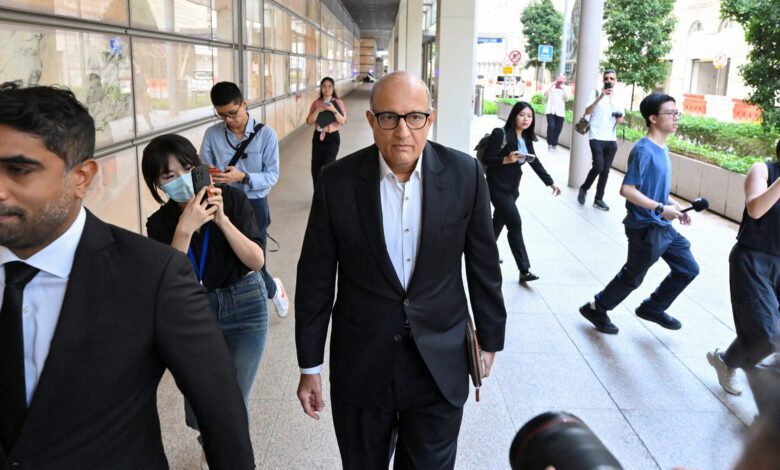
Former Singapore transport minister S. Iswaran pleaded guilty on September 24, 2024 to four counts of obtaining valuable items from businesspeople connected to his official duties and one count of obstructing justice. The High Court convicted him in a rare criminal case involving a former cabinet minister.
The plea changed the expected trial
Iswaran had previously said he would contest the case, but prosecutors proceeded with five amended charges on the first scheduled trial day. Thirty other charges were considered for sentencing rather than tried separately.
A guilty plea waived the need to prove the admitted counts at a full trial.
Four counts involved valuable items
Section 165 of Singapore’s Penal Code prohibited a public servant from receiving valuables without adequate consideration from people involved in official business. The items included Formula One tickets, travel and entertainment connected to business figures Ong Beng Seng and Lum Kok Seng.
The offence did not require the same proof as a corruption charge alleging a specific favour.
The obstruction count involved repayment
Iswaran admitted conduct concerning repayment of S$5,700 for a business-class flight from Doha. Prosecutors treated the timing and circumstances as obstruction of justice.
Repaying a benefit after scrutiny begins does not necessarily erase the original conduct or later interference.
The case tested Singapore’s integrity reputation
Singapore promotes strict public-sector standards and had not held a ministerial criminal trial in nearly half a century. The prosecution therefore carried institutional significance beyond the monetary value of the gifts.
Rule of law is shown through consistent procedure, not claims that misconduct is impossible.
Business access created the conflict
Ong had interests connected to the Singapore Grand Prix, and Iswaran held relevant ministerial responsibilities. Rules on benefits exist because private generosity can create obligation or an appearance of privileged access even without a proven quid pro quo.
Officials should disclose and decline benefits before that ambiguity arises.
Sentencing remained for the court
Prosecutors and defence made different recommendations, while Justice Vincent Hoong had to consider culpability, public trust and the guilty plea. The court later imposed a custodial sentence.
Early articles should not present either side’s requested term as the final punishment.
The plea did not decide every original allegation
Conviction on five charges established those offences. It did not convert all 35 initial counts into separate convictions or prove every public suspicion about policy decisions.
Precise charge language prevents a high-profile case from expanding through repetition.
Transparency provided the lasting lesson
Official court reasons and the Attorney-General’s statement documented the admitted conduct, legal basis and sentence. Public agencies could use the case to strengthen gift registers, recusals and training.
The rarity of prosecution made accurate reporting especially important. Iswaran was not merely accused after September 24; he had pleaded guilty and been convicted on five specific counts, with sentencing and institutional reform as the remaining issues.
Later coverage should state the sentence, any appeal and the disposition of the remaining charges. That complete record allows readers to distinguish a negotiated plea from exoneration or conviction on every allegation and preserves confidence that even an unusual case was handled through published law.



