
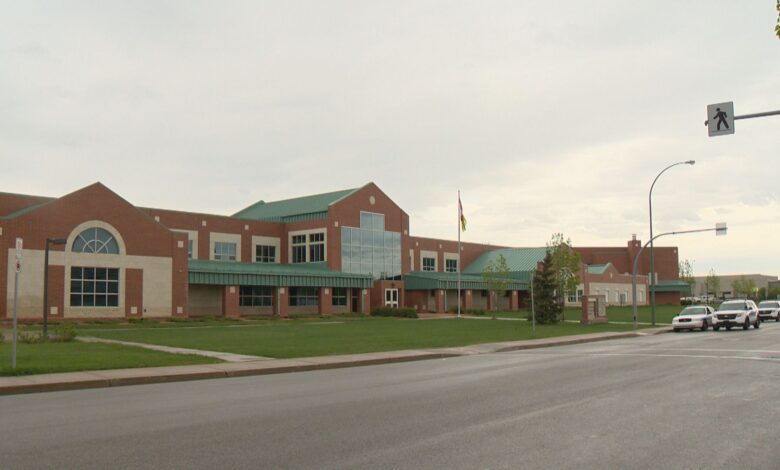
Rapid enrolment growth forced Jack MacKenzie School in Regina to convert its library, dance studio and teachers’ lounge into classrooms in September 2024. Parents said the improvised arrangement reduced important shared spaces and showed that new neighbourhood development had outpaced education infrastructure.
The division was adding hundreds of students
Regina Public Schools director of education Mark Haarmann said the system was gaining roughly 800 students in a typical year—about the enrolment of an elementary school. Existing buildings had to absorb that growth while permanent construction took years.
Division-wide numbers help explain the pressure but do not make every local compromise acceptable.
Specialized spaces serve the whole school
A library supports literacy, research and quiet work across grades; a dance studio supports physical and arts education; and a staff room gives teachers space to prepare and recover. Converting them provides immediate seats at the cost of other functions.
The educational impact should be assessed, not treated as a simple room-count exercise.
Parents worried about doing more with less
Parent Jaclyn Gan said increasing class numbers and complexity placed additional pressure on teachers and affected students’ education. Her concern was not that staff lacked commitment, but that they were being asked to compensate for inadequate capacity.
Administrators said student experience remained a priority during the temporary arrangement.
Portable classrooms were the near-term response
The school expected portable units by January. Portables can restore internal spaces more quickly than a new building, but they require servicing, safe access, accessibility, supervision and planning for severe winter conditions.
A stated delivery date should be followed by confirmation that the units opened and relieved crowding.
Growth in The Towns contributed to demand
Families from the expanding southeast neighbourhood attended existing schools because local facilities were not yet available. The province announced two new schools for The Towns, but design and construction meant they would not provide immediate relief.
Housing approvals and school-capacity forecasts need closer coordination.
New buildings can also fill quickly
Saskatchewan communities had seen recently opened schools require portables soon afterward. That suggests projections must consider multiple population scenarios, housing completion and flexible expansion rather than only a single expected enrolment line.
Overbuilding has costs, but chronic underbuilding transfers costs to students and staff.
Funding responsibility should be explicit
School divisions manage classrooms and advocate for sites, while the province controls major capital approvals and municipalities plan neighbourhoods. Public timelines should identify which body owns each decision so delays are not hidden in general statements about collaboration.
Families need clear interim and permanent plans.
Quality requires more than fitting everyone indoors
Useful measures include class size, access to libraries and arts spaces, staff workload, special-support capacity and the time students spend moving between temporary rooms. Safety, ventilation and accessibility also matter.
Jack MacKenzie’s adaptation kept classes operating, but it was evidence of a capacity failure rather than a sustainable model. Portables could relieve the immediate strain; durable planning required schools to arrive with the communities they were meant to serve and enough flexibility for growth that exceeded forecasts.



