
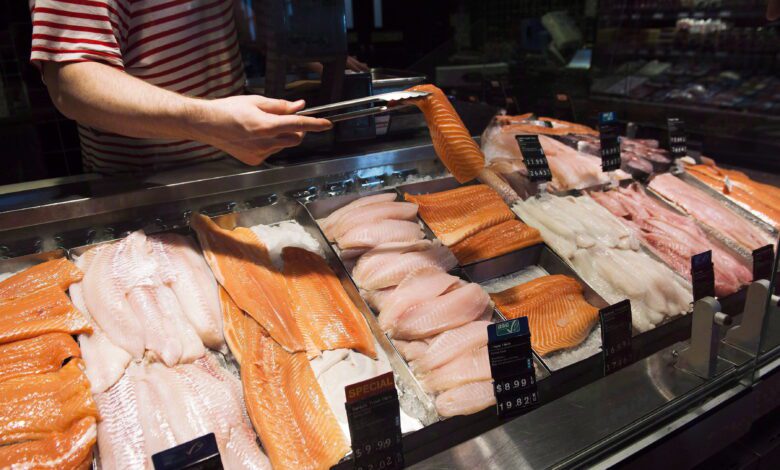
A peer-reviewed study of seafood sold by Calgary restaurants and retailers found that roughly one in five sampled products was mislabelled, while many legally accepted market names were too broad to identify a single species. Researchers warned that both substitution and ambiguous naming can hide health, price and conservation information from consumers.
The researchers used DNA barcoding
Students and scientists from Ambrose University, Mount Royal University and the University of Calgary collected products between 2014 and 2020. They sequenced a portion of the cytochrome c oxidase I gene and compared it with reference data to identify species.
DNA can test biological identity even after visual features are removed by processing.
The sample included fish and invertebrates
The published study examined 347 finfish and 109 invertebrate products, including bivalves, cephalopods and shrimp. Researchers compared the detected species with the market name and the Canadian Food Inspection Agency’s Fish List.
It was the first Canadian study designed to compare these broad seafood groups in this way.
Mislabelling and ambiguity were different problems
A product was mislabelled when the identified species did not correspond with its declared market name under the regulatory list. A name was ambiguous when regulators allowed multiple species to be sold under it.
A legally permitted broad name may still prevent a buyer from knowing exactly what they purchased.
Intent was not established by the test
Substitution can result from deliberate fraud, errors, translation, inconsistent common names or mistakes earlier in a complex supply chain. DNA identifies the mismatch but usually cannot show where or why it occurred.
Calling every discrepancy intentional fraud would go beyond the method.
Consumers can face financial and health consequences
A cheaper species may be sold at a premium price, and an undeclared species can complicate allergy, toxin or dietary decisions. Broad names also make it harder to evaluate origin and harvest method.
Food-safety risk depends on the species and handling, so it should not be generalized to every mismatch.
Conservation information can disappear
Researchers found that substitution and especially ambiguous market names could conceal species of conservation concern. Consumers attempting to avoid vulnerable stocks need precise identity and traceable origin.
A sustainability label is only as reliable as the records connecting the product to harvest.
The study had defined limits
Samples came from one city over several years and were not a current national census of every seafood sale. The one-in-five summary should be attached to the Calgary sample and methodology rather than applied automatically to all Canadian products.
Other studies have reported different rates depending on place, outlet and sampling strategy.
Traceability and clearer names are practical responses
Boat-to-plate records, scientific names, harvest area, production method and consistent common names would improve accountability. Risk-based inspection and DNA testing can verify those records.
The study’s message was broader than catching individual sellers: Canada should reduce regulatory ambiguity that keeps accurate species information from buyers. Clear rules protect honest businesses as well as consumers and ecosystems. Enforcement, supply-chain documentation and public reporting must work together so that the name on a menu or package means something verifiable.



