
U.N. General Assembly: U.N. Live Updates: General Assembly Opens Amid War and Global Turmoil
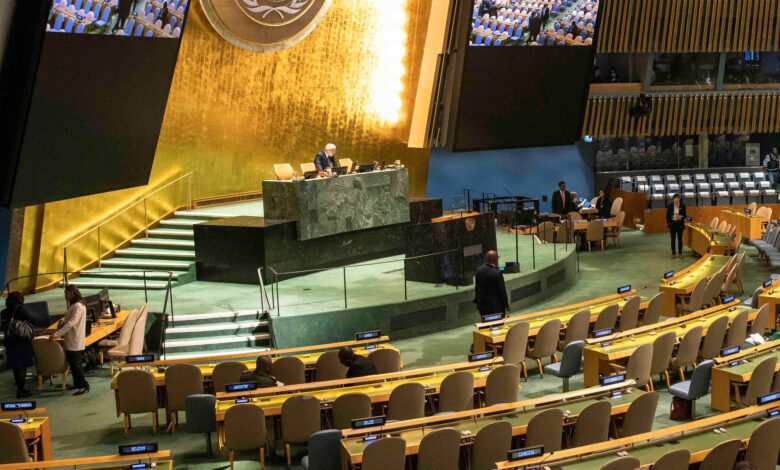
The 79th United Nations General Assembly’s high-level general debate opened on September 24, 2024 amid wars in Gaza, Ukraine and Sudan, escalating Israel–Hezbollah violence and worsening climate risks. Secretary-General António Guterres warned that conflicts were spreading while international institutions struggled to produce solutions.
The General Assembly includes every UN member
All 193 member states have a vote in the Assembly, unlike the Security Council’s limited membership and veto structure. The annual debate gives leaders a global platform but usually does not create binding law.
Its value lies in diplomacy, public commitments and coalition building.
War dominated the opening
Russia’s invasion of Ukraine continued, Gaza faced devastating fighting and humanitarian need, and Lebanon had just endured its deadliest day in decades. Sudan’s civil war displaced millions with less sustained international attention.
Each conflict had distinct causes and law; combining them only as “turmoil” risked erasing necessary detail.
Guterres criticized impunity
The secretary-general argued that governments and armed actors increasingly believed they could violate international law without consequence. He urged ceasefires, civilian protection and reform of institutions.
His office can mediate and mobilize agencies but cannot compel major powers to accept peace.
Security Council division limited action
Permanent-member vetoes repeatedly blocked or weakened responses to wars involving allies and strategic interests. Many states renewed demands for broader representation, including permanent African participation.
Reform itself requires difficult agreement from countries holding existing power.
The Summit of the Future preceded the debate
Members adopted a Pact for the Future addressing sustainable development, peace, technology and global governance. The document set aspirations and processes rather than instantly enforceable transformation.
Follow-up budgets, negotiations and national actions would determine practical effect.
Climate and development remained inseparable
Vulnerable states emphasized debt, extreme weather and insufficient adaptation finance. Progress toward the Sustainable Development Goals was far off track.
Leaders’ pledges needed specific funding and accessible terms, not reclassification of existing aid.
Speeches required factual attribution
Heads of state used the podium to defend policies and accuse adversaries. An official UN broadcast verifies what was said, not whether every claim was true.
Coverage should compare assertions with UN data, court findings and independent evidence.
The gathering was a forum, not a world government
The UN can coordinate relief, establish norms and create space for negotiation, but members retain sovereignty and supply resources. Failure often reflects division among governments as much as the institution itself.
The 2024 opening captured a severe credibility test: leaders described a rules-based order while civilians experienced wars the system could not stop. Meaningful success would be measured after the speeches through access, diplomacy and compliance.
The Assembly could still build consensus through resolutions, treaty work and elected bodies, even where it lacked enforcement power. Smaller states used the forum to place neglected crises on the record and meet partners unavailable at home. Journalists should follow whether announced pledges received money and whether negotiations continued after delegations left New York. That follow-up distinguishes multilateral work from annual ceremony.
It also gives citizens a concrete basis for judging national speeches.



