Taiwan and U.S. Work to Counter China’s Drone Dominance
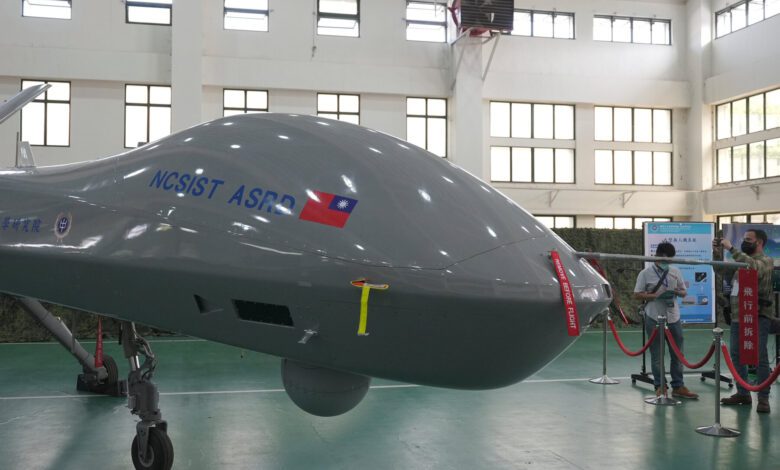
Taiwan and the United States deepened industrial cooperation in 2024 to build drone supply chains less dependent on China. The effort joined Taiwan’s security need for inexpensive unmanned systems with American restrictions on Chinese equipment and components.
China held a strong commercial position
Chinese manufacturers dominated much of the global consumer and commercial drone market through scale, integrated components and competitive prices. That dominance extended beyond finished aircraft into batteries, motors, sensors and other inputs.
Replacing a platform while retaining the same vulnerable components would not create a truly independent supply chain.
Taiwan wanted domestic production capacity
Taipei promoted a “drone national team” linking aerospace, electronics and software firms. Officials sought systems for reconnaissance, communications and other civil or defence uses while learning from Ukraine’s rapid adaptation.
Military requirements include secure links and resilience that ordinary photography drones may not provide.
A US business mission visited Taiwan
American companies travelled to explore partnerships, suppliers and co-production. The mission aimed to connect Taiwan’s manufacturing skills with demand from the United States and other democratic partners.
Meetings can begin relationships, but contracts, qualification testing and sustained orders determine whether capacity actually grows.
Security concerns drove diversification
Governments worried that sensitive data, firmware updates or component dependence could create surveillance and disruption risks. US agencies had already restricted certain Chinese-made drones.
Country of origin is only a proxy; rigorous cybersecurity testing and transparent component inventories are still necessary for every supplier.
Economics remained a difficult constraint
Chinese firms benefited from a mature ecosystem and high production volume. New entrants faced higher unit costs, fragmented demand and uncertainty about which designs governments would purchase.
Multi-year procurement and common standards could give manufacturers confidence to invest without guaranteeing a protected monopoly.
Export controls could complicate cooperation
US rules restrict transfer of some military-grade technology, while Chinese controls can affect critical materials and components. Partners needed licensing and technical arrangements that protected sensitive capabilities without blocking commercial scale.
A secure alliance supply chain still operates within national law.
Drones are not a complete defence strategy
Small unmanned systems can provide surveillance, targeting support, logistics and mass at lower cost than crewed aircraft. They remain vulnerable to jamming, air defence, weather and rapid obsolescence.
Training, communications, doctrine and counter-drone systems are as important as manufacturing airframes.
Success required measurable independence
The initiative’s value would be shown by qualified non-Chinese components, production volume, secure software and field performance. Promotional alliances alone could conceal continuing single-source dependence.
US–Taiwan cooperation offered a plausible route to diversify a strategic industry, but it needed competitive procurement and realistic cost expectations. The goal was resilient choice, not the assumption that every non-Chinese drone was automatically secure or effective.
Joint exercises and commercial trials could reveal failures before large orders, while published standards could let smaller suppliers compete. Allies would also need repair capacity and interchangeable components so a disrupted factory did not ground entire fleets during a crisis.
Long-term resilience depended on that less visible industrial depth.
It also required stable demand.