This Is What Can Land You in Jail for Sedition in Hong Kong
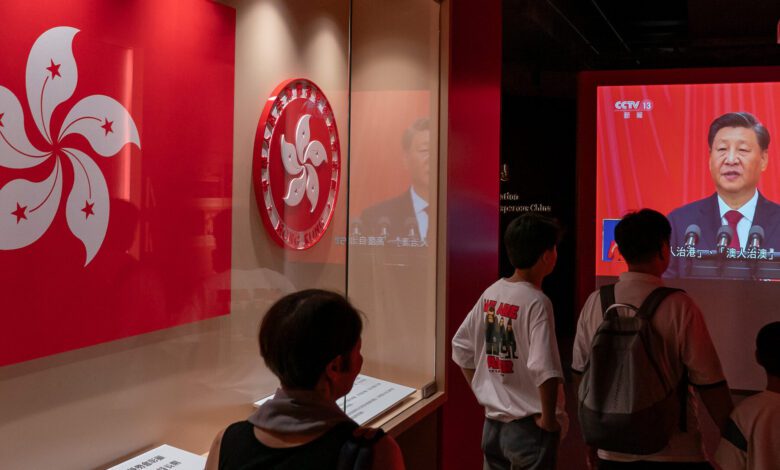
Hong Kong’s first sedition convictions under its 2024 Safeguarding National Security Ordinance involved a protest T-shirt, slogans written on bus seats and political posts online. The cases showed that non-violent expression could produce prison terms of 10 to 14 months under the expanded law.
The locally enacted law took effect in March
The ordinance fulfilled the Hong Kong government’s duty under Article 23 of the Basic Law to legislate against threats including treason, sedition, sabotage, external interference and theft of state secrets.
It operated alongside the national security law imposed by Beijing in 2020. The new ordinance increased the ordinary maximum sentence for sedition from two years to seven, or 10 where collusion with an external force is involved.
A T-shirt produced the first conviction
Chu Kai-pong wore a shirt bearing a slogan associated with the 2019 protest movement and a mask referring to its “five demands” on a politically significant anniversary. He pleaded guilty and received 14 months in prison.
The case demonstrated that clothing can be treated as a public communication when prosecutors prove the required seditious intention.
Bus graffiti led to another sentence
Chung Man-kit admitted writing pro-independence and protest slogans on public bus seats on several occasions. He was sentenced to 10 months.
Property damage could be punished under ordinary law, but the sedition charge addressed the political meaning of the words and carried the new national-security framework.
Online posts were also prosecuted
Au Kin-wai received a 14-month sentence over political statements and images posted across social platforms. The court treated repeated publication and the messages’ intended effect as aggravating context.
Digital speech can remain searchable and reach more people than a physical slogan, but audience size does not by itself establish that expression threatens national security.
Authorities said ordinary criticism remained lawful
The Hong Kong government argued that residents and journalists could still make fact-based comments and criticize policy without fear of accidental violation. It said the cases involved intent to incite hatred or endanger security.
That assurance placed enormous weight on how police, prosecutors and judges interpret intention. Broad wording can encourage self-censorship long before a court tests a statement.
Rights groups saw peaceful dissent being criminalized
Human-rights organizations condemned the prison terms as disproportionate restrictions on expression. They argued that political slogans, offensive opinions and calls for change should not become national-security crimes without a direct connection to violence.
International human-rights law permits some security restrictions but requires legality, necessity and proportionality. Governments cannot invoke national security as an unlimited exception.
The cases followed a wider political crackdown
Opposition parties, independent media and civil-society groups had already closed or been weakened after the 2020 law and prosecution of prominent activists. Electoral rules were redesigned to screen candidates for political loyalty.
Within that environment, the new convictions sent a message beyond the three defendants: familiar language from the 2019 protests now carried heightened personal risk.
The practical boundary remained uncertain
The cases showed that public display of banned or independence-related slogans, repeated political graffiti and certain online attacks could lead to imprisonment. They did not create a simple list of every prohibited phrase.
For residents, journalists and visitors, that uncertainty is itself consequential. Hong Kong retained legal protections for speech on paper, while the first Article 23 sedition sentences demonstrated how narrowly authorities were prepared to interpret dissent in practice.