
Zelensky to Meet Trump Amid Fears for Continued U.S. Support for Ukraine
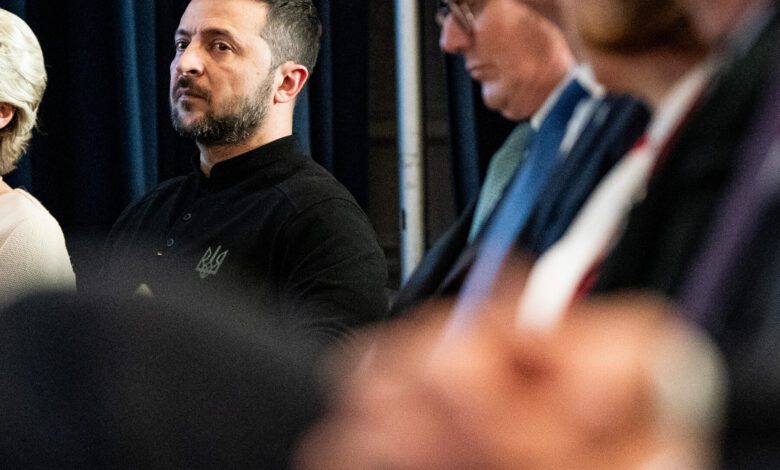
Ukrainian President Volodymyr Zelensky met Donald Trump at Trump Tower in New York on September 27, 2024, as Kyiv sought durable American support against Russia’s invasion. The meeting placed Ukraine policy directly inside the United States presidential campaign after days of public tension between the two men.
The leaders met for about 40 minutes
Zelensky had travelled to the United States to address the United Nations and present what he called a victory plan. He met President Joe Biden and Vice President Kamala Harris before sitting down with the Republican nominee.
Trump said both sides wanted the war to end and spoke of reaching a fair deal. Zelensky emphasized that Russia had invaded Ukrainian territory and that pressure on President Vladimir Putin was necessary.
Their relationship carried unusual history
A 2019 telephone call between Trump and Zelensky became central to Trump’s first impeachment. The House accused Trump of withholding official actions while pressing Ukraine to announce investigations with domestic political implications; the Senate acquitted him.
That background made the 2024 encounter more than a routine foreign-policy meeting. Both leaders knew that every phrase would be interpreted through years of partisan conflict.
Trump had criticized the scale of US assistance
During the campaign, Trump repeatedly argued that European states should bear more of the burden and claimed he could end the war quickly. He did not publicly explain terms that Ukraine and Russia would both accept.
Some Republican lawmakers continued to support military assistance, while others resisted additional packages. The disagreement made future congressional funding uncertain regardless of presidential statements.
Kyiv sought bipartisan continuity
Ukraine relies on American air-defence systems, ammunition, intelligence and financial assistance. A sudden policy reversal could alter battlefield conditions and weaken Kyiv’s negotiating position.
Meeting both presidential candidates was therefore a practical diplomatic effort. It did not signify endorsement of either campaign.
A dispute over a Pennsylvania visit added tension
Earlier in the trip, Zelensky visited an ammunition plant in Scranton with Democratic officials. Republican critics called the appearance partisan and objected to comments in which he questioned positions taken by Trump’s running mate, JD Vance.
Ukrainian officials said the factory visit recognized workers producing equipment used in their defence. The controversy nevertheless showed how easily wartime diplomacy could become campaign material.
A quick settlement could carry very different meanings
Diplomacy might halt deaths and destruction, but a ceasefire without credible security arrangements could allow Russia to regroup. For Ukraine, a “fair” agreement required sovereignty and protection against renewed attack.
Russia occupied internationally recognized Ukrainian territory and demanded major concessions. Any description of peace talks must acknowledge that asymmetry rather than presenting the conflict as a misunderstanding between equal claimants.
European support was also essential
European countries had supplied weapons, accepted refugees and financed Ukraine, yet the United States retained capabilities that were difficult to replace quickly. NATO allies watched the election for signs about American commitments to the alliance.
A durable policy would have to combine military aid, sanctions enforcement, humanitarian support and a realistic diplomatic strategy.
The meeting reduced uncertainty but produced no agreement
Both men described the conversation positively, and a face-to-face discussion was preferable to public accusation. No detailed peace framework or funding commitment emerged from the meeting.
Its immediate value was keeping communication open. The consequential decisions would come through elections, congressional votes and negotiations in which Ukrainians themselves retained the central stake.



