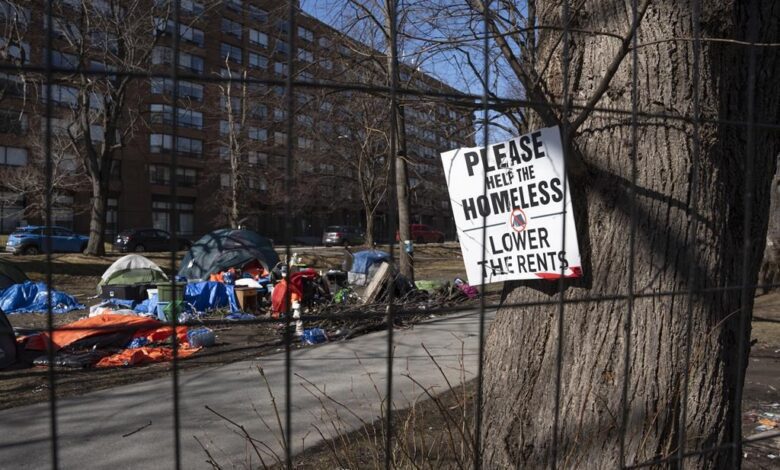
Affordability dominated Nova Scotia’s 2024 provincial election campaign as residents confronted rising rents, scarce vacancies, homelessness and the broader cost of daily life. The November 26 vote was not a referendum on one statistic, but housing pressure gave every party an immediate test: explain what government could change, how quickly it could act and who would bear the cost.
A housing shortage visible across the province
In Halifax, the municipality’s list of people experiencing homelessness stood at 1,335 on October 30, 2024, compared with 417 when Tim Houston became premier in 2021. The public-housing wait-list had reached about 7,020 households, roughly half of them seniors. Those figures measured different populations and should not be added together, but both showed that secure, affordable housing was beyond the reach of many residents.
A vacancy rate near one per cent left renters with few alternatives when a lease ended or a price increased. The calculated living wage for Halifax was reported at $28.30 an hour, while the provincial minimum wage was $15.20. A living-wage estimate is not a statutory rate; it is a model of what a household needs for a modest standard of living under stated assumptions.
What the opposition parties proposed
The Liberals promoted a rent bank intended to help tenants bridge short-term financial emergencies. They also proposed reducing the harmonized sales tax by two percentage points and removing the provincial portion of that tax from prepared grocery-store food. Those measures could provide broad relief, although a tax reduction also lowers public revenue unless growth or spending changes replace it.
The New Democratic Party proposed a 2.5 per cent rent cap and a ban on fixed-term leases, which critics said could be used to avoid protections applying to continuing tenancies. Its platform also included prefabricated public housing and loans to help first-time buyers assemble a down payment. Rent regulation can limit sudden increases for existing tenants, but supply, enforcement and treatment of new units affect its long-term results.
The Progressive Conservative response
Houston’s Progressive Conservatives entered the campaign as the incumbent government. Their affordability measures included a home-heating rebate, indexing income-assistance rates to inflation, a one-point HST reduction, a proposed cap on electricity-rate increases and a path to a $16.50 minimum wage.
The party had won in 2021 with health care as a central promise. By the 2024 campaign, approximately 145,114 Nova Scotians were recorded as waiting for a family doctor. Housing did not replace health care as a concern; it competed with it for money, personnel and political attention.
How voters could judge the promises
A useful affordability test goes beyond the size of a rebate. Voters could ask whether a plan increased the supply of homes affordable to low- and moderate-income residents, protected tenants during construction, included rural communities and had a published price and schedule. They could also distinguish temporary relief from structural measures affecting land, infrastructure and non-market housing.
Population growth was part of the debate. The government had promoted a goal of substantially increasing Nova Scotia’s population, while critics argued that housing and public services had not expanded fast enough. New residents can enlarge the workforce and tax base, but growth requires timely investment in homes, health care, schools and transportation.
An election framed by household pressure
Pre-election polling cited in the campaign report placed the Progressive Conservatives ahead, with the NDP and Liberals competing behind them. Polls are snapshots shaped by sampling and timing, not election results. The governing party ultimately won a renewed mandate, but that outcome did not make the underlying affordability evidence disappear.
The campaign’s central question was therefore not whether Nova Scotians felt pressure. It was which combination of immediate assistance, tenant protection, construction and public investment could provide durable relief. The promises can now be assessed against rents, vacancy, homelessness, housing completions and access to essential services rather than against campaign language alone.