
U.S.-Led Coalition in Iraq to Wind Down Its Mission
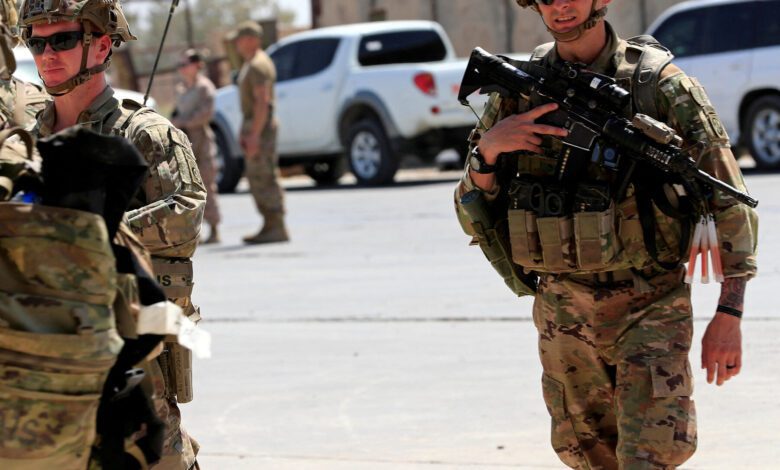
The United States and Iraq announced on September 27, 2024 that the military mission of the U.S.-led coalition against Islamic State would transition in two phases. The agreement was a timetable for changing the mission, not an immediate removal of every American service member from Iraq.
The coalition returned after Islamic State’s rise
Islamic State seized large areas of Iraq and Syria in 2014, collapsing local security forces and subjecting communities to killings, enslavement and forced rule. Iraq invited international assistance, and the coalition provided air support, training, intelligence and advice.
The group’s territorial caliphate was defeated, but cells continued attacks and recruitment. Preventing a resurgence remained the stated purpose of the smaller foreign presence.
About 2,500 U.S. troops were in Iraq
At the time of the announcement, roughly 2,500 American personnel served in Iraq. They operated alongside troops from partner countries and worked with Iraqi federal and Kurdish forces.
The number was far below the force deployed during the Iraq war. Nevertheless, the presence remained politically sensitive because of the 2003 invasion and attacks by Iran-aligned militias.
Phase one ended the coalition mission in Iraq
The first phase ran to the end of September 2025. It was designed to conclude the formal military mission of the coalition inside Iraq and shift security cooperation toward bilateral relationships.
That wording left important details to negotiation, including troop numbers, bases and the roles performed under any continuing United States-Iraq partnership. Ending one mission label was not necessarily identical to ending all assistance.
Phase two supported operations in Syria
Iraq and the United States agreed that coalition activity against Islamic State in northeast Syria could continue from a location in Iraq through at least September 2026, subject to conditions and consultation.
Islamic State detainees, camps and active cells in Syria created risks that crossed the border. Iraqi leaders therefore had an interest in preventing renewed territorial control while also asserting sovereignty over foreign deployments.
Baghdad faced competing domestic pressures
Some Iraqi parties and militias demanded a complete American withdrawal and described the presence as an occupation. Other officials valued training, intelligence and air support and feared that a rapid departure could create security gaps.
The government also had to manage relations with both Washington and Tehran. Attacks on coalition bases and retaliatory strikes demonstrated how Iraq could become an arena for disputes between outside powers.
A transition carried operational risks
Iraqi forces had gained considerable experience, but Islamic State could exploit remote terrain, political exclusion and instability in neighbouring Syria. Intelligence sharing and coordination between federal and Kurdish forces remained particularly important.
A responsible drawdown therefore required tests based on threat conditions and local capacity, not only a ceremonial date. It also needed clear public reporting so a renamed mission did not conceal unchanged activity.
The agreement acknowledged Iraqi sovereignty
A negotiated timetable reduced uncertainty and answered long-standing demands for a relationship less centred on an international combat coalition. It framed future cooperation under the bilateral strategic partnership and Iraq’s constitution.
Sovereignty also means the Iraqi government is accountable for protecting all communities and preventing armed groups outside state command from dictating security policy.
“Wind down” required a precise reading
The 2024 announcement marked the beginning of a phased change rather than a sudden vacuum. Coalition operations in most of Iraq were to end first, while support connected to Syria continued longer and bilateral cooperation remained possible.
Its success would be measured by more than the number of foreign troops. The lasting questions were whether Islamic State stayed contained, Iraqi institutions gained control, civilians became safer and the country avoided another cycle of militia escalation and external intervention.



