
Live Updates: Israel Says It Killed Hamas’s Leader in Lebanon
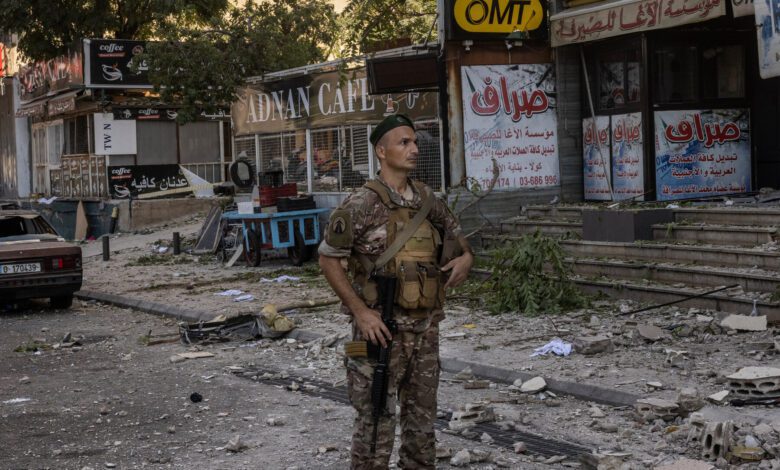
Hamas said its leader in Lebanon, Fateh Sharif Abu el-Amin, was killed in an Israeli airstrike on September 30, 2024. The strike hit his home in the el-Buss Palestinian refugee camp near the southern Lebanese city of Tyre and also killed his wife, son and daughter.
Hamas identified Sharif as its senior figure in Lebanon
The Palestinian group described Sharif as its leader in Lebanon and a member of its overseas leadership. Israel’s military said he coordinated Hamas activity in Lebanon and worked with Hezbollah, claims that were made by a party to the conflict and required independent scrutiny.
His killing came as Israeli operations expanded beyond exchanges along the Israel-Lebanon border. It illustrated how the Gaza war had become entangled with armed groups, refugee communities and political networks elsewhere in the region.
The strike hit a densely populated refugee camp
El-Buss is one of Lebanon’s long-established Palestinian refugee camps. Families live close together, leaving little physical separation between a claimed military target and surrounding civilians.
The deaths of Sharif’s family underscored that consequence. Even when a belligerent identifies an individual as a lawful target, international humanitarian law still requires distinction, proportionality and feasible precautions to reduce civilian harm.
Sharif also worked for the UN agency for Palestinian refugees
UNRWA confirmed that Sharif had been an employee and the principal of one of its schools. The agency said he had been suspended without pay in March 2024 while it investigated allegations concerning political activities.
That employment raised difficult questions about neutrality and oversight, but it did not by itself prove every allegation made after his death. A responsible account distinguishes confirmed employment and suspension from disputed intelligence claims.
The killing occurred during a rapid regional escalation
Israel and Hezbollah had exchanged fire across the border since October 2023. Hezbollah said its attacks supported Palestinians in Gaza, while Israel said it needed to make northern communities safe enough for displaced residents to return.
By late September 2024, Israeli strikes across Lebanon had intensified dramatically. Hezbollah leader Hassan Nasrallah had been killed in Beirut days earlier, and fears of a wider ground war were growing.
Palestinian groups maintained an armed presence in Lebanon
Lebanon hosts a large Palestinian refugee population, many of whom remain excluded from full citizenship and face restrictions on work and property. Several camps also contain armed factions operating within a complicated security arrangement.
Hamas had acknowledged launching attacks from Lebanon during the border conflict. That reality did not erase the protected status of civilians living near factional figures or facilities.
Competing accounts needed careful wording
Hamas presented Sharif as a leader killed with his family. Israel described him as an operational coordinator. UNRWA confirmed his institutional role and suspension but did not validate all military allegations.
Those statements answer different questions and came from organizations with different interests. Reporting them separately prevents an official claim from being transformed into an established fact.
The broader cost extended beyond one commander
Strikes and rocket fire had already displaced civilians on both sides of the border. Lebanon then experienced mass displacement as air attacks spread, while Israeli communities continued to face projectiles and security restrictions.
Sharif’s death was therefore significant both for Hamas’s organization in Lebanon and for the civilians killed alongside him. It also showed why escalation inside crowded civilian areas carries consequences that a narrow announcement about a militant leader can obscure.



