After Successes, Israel’s Military Is in a ‘Long Game’ With No Clear Outcome
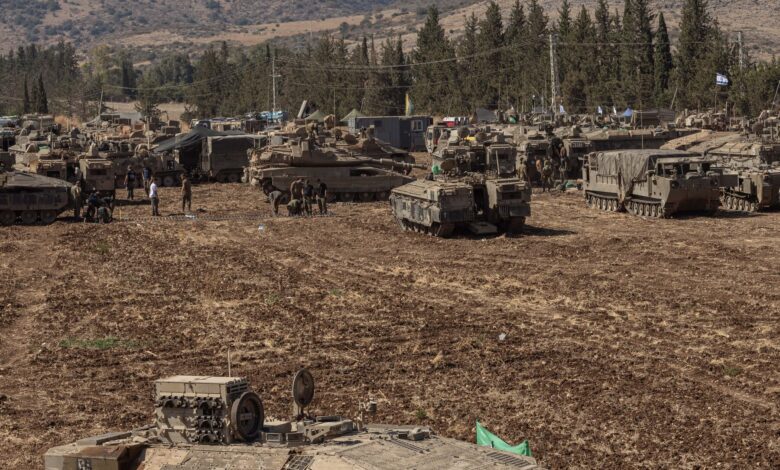
By early October 2024, Israel had inflicted major tactical losses on Hezbollah and restored part of the military initiative lost in the Hamas-led attack of October 7, 2023. The gains did not define a political end state.
“Success” described tactical effects
Israeli operations killed Hezbollah leader Hassan Nasrallah and other senior commanders, struck weapons and communications networks and disrupted the organization through explosive pagers and radios. Israel then began a ground incursion into southern Lebanon.
Calling those actions military successes refers to degraded leadership and capability. It is not a moral judgment and does not erase civilian deaths, displacement or the obligation to distinguish military targets and use proportionate force.
The northern objective was concrete but difficult
Hezbollah began firing rockets and drones toward Israel on October 8, 2023, saying it was supporting Gaza. Tens of thousands of residents left northern Israeli communities, while far larger numbers of Lebanese civilians were later displaced as strikes escalated.
Israel said it wanted its northern residents to return safely. Killing commanders could reduce immediate threat, but a durable return required enforceable security arrangements rather than an open-ended cycle of rockets and air strikes.
Gaza remained unresolved
Israeli forces had severely weakened Hamas formations and controlled substantial territory, yet fighting continued, hostages remained in captivity and the humanitarian catastrophe deepened. Tactical control did not produce an agreed postwar government for Gaza.
The Hamas-led attack killed about 1,200 people in Israel and took approximately 250 hostages. Israel’s subsequent campaign killed many thousands of Palestinians, with civilians comprising a large part of the toll, and displaced most of Gaza’s population.
Iran made the conflict overtly regional
On October 1, Iran launched roughly 180 ballistic missiles at Israel, describing the attack as retaliation for the killings of senior Hezbollah, Hamas and Iranian figures. Israel and its partners intercepted many, but the exchange demonstrated escalation between states rather than only through allied armed groups.
A retaliatory ladder can reward each side’s belief that another strike restores deterrence. It also creates repeated opportunities for miscalculation and mass civilian harm.
Military momentum can obscure political limits
Removing an adversary’s leadership may disrupt decisions and morale, but armed organizations can decentralize, recruit replacements and continue guerrilla attacks. Destruction can also increase grievance and weaken the civilian institutions needed for a settlement.
Israel faced simultaneous commitments in Gaza, Lebanon, the West Bank and against Iran-aligned groups elsewhere. Personnel, munitions, economic cost and international support were not unlimited.
Resolution 1701 remained a possible framework
The United Nations resolution that ended the 2006 Israel-Hezbollah war called for armed groups to remain north of the Litani River and for Lebanese and UN forces to support security in the south. Its incomplete implementation was central to the renewed conflict.
A workable arrangement required monitoring, Lebanese state capacity, Israeli withdrawal and a mechanism for violations. None could be secured through battlefield pressure alone.
A ceasefire later stopped the full-scale phase
Israel and Lebanon accepted a ceasefire that began on November 27, 2024, built around renewed implementation of Resolution 1701 and phased deployment and withdrawal. It reduced major hostilities but accusations of violations showed the fragility of the arrangement.
The agreement illustrated both the utility and limit of military pressure: it changed negotiating conditions, but the outcome still depended on diplomacy and enforcement.
The “long game” was political
No battlefield result could by itself free every hostage, protect both Israeli and Palestinian civilians, create legitimate governance in Gaza, strengthen Lebanon’s state or reconcile Israel and Iran. Those goals sometimes pulled policy in different directions.
The key distinction in October was between regained operational capability and a defined end state. Israel had demonstrated intelligence reach and destructive power after a devastating failure. Whether that power produced lasting security depended on political choices, adherence to international law and agreements capable of protecting civilians long after the immediate military momentum faded.