Assange, in First Speech Since Release, Says He Was Jailed for Journalism
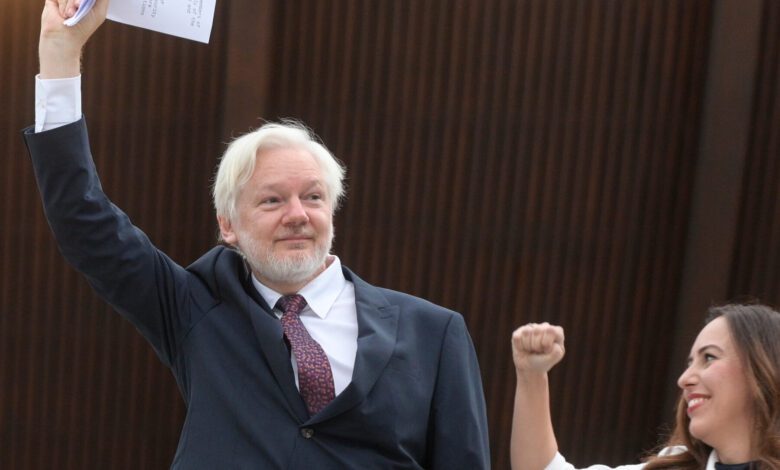
WikiLeaks founder Julian Assange used his first public address after leaving British prison to tell European lawmakers that he had obtained freedom by pleading guilty to what he described as journalism. The October 1, 2024, appearance in Strasbourg renewed a dispute over national security, source protection and the boundary between publishing and participation in acquiring classified material.
A plea agreement ended the U.S. case
Assange pleaded guilty in June 2024 to one U.S. felony count of conspiring to obtain and disclose national-defence information. A court in the Northern Mariana Islands credited the time he had spent in Belmarsh Prison and allowed him to return to Australia.
A plea is a criminal conviction, not a judicial declaration that all of the original prosecution’s allegations were proven. The agreement avoided a full extradition trial and trial on the merits.
He framed the conduct as news gathering
Assange told the Parliamentary Assembly of the Council of Europe’s legal-affairs committee that he sought information from a source and informed the public. He said accepting the plea was the practical way to regain liberty after years of confinement.
His phrase “guilty to journalism” was an argument about the character of the prosecution, not the formal wording of the offence.
The publications exposed matters of public interest
WikiLeaks released U.S. diplomatic cables and military records supplied by Chelsea Manning, including material documenting civilian harm and official assessments. The disclosures informed reporting around the world.
Journalists and rights groups feared that using espionage law against a publisher could criminalize receiving and publishing government secrets in the public interest.
Critics raised source and safety concerns
U.S. authorities alleged that Assange agreed to help Manning try to crack a password and that unredacted publication exposed named sources. WikiLeaks and supporters disputed important parts of the government’s framing and emphasized later redaction circumstances.
Public-interest value does not eliminate ethical duties to minimize foreseeable harm. Those concerns can be evaluated without assuming they justify every charge or years of pretrial confinement.
His legal history involved several proceedings
Assange spent years in Ecuador’s London embassy while facing Swedish investigation and fear of U.S. prosecution. After asylum ended in 2019, British police arrested him for breaching bail, and he remained imprisoned during the U.S. extradition case.
Swedish authorities later closed their investigation without a charge. That outcome should not be misstated as either conviction or a trial acquittal.
European lawmakers criticized the treatment
The Parliamentary Assembly subsequently adopted a resolution describing Assange as a political prisoner, warning of a chilling effect on journalism and urging investigation of alleged abuses revealed by WikiLeaks.
PACE is a human-rights and deliberative body, not a court that could erase the U.S. conviction. Its resolution carried political and normative weight rather than direct judicial force.
Press freedom and accountability can coexist
States may legitimately protect operational secrets and personal safety. Prosecution becomes dangerous when definitions are broad enough to cover routine contact between a reporter and a confidential source.
A durable standard should distinguish solicitation or publication from direct involvement in unlawful access, and require proof of intent and actual risk.
The speech was advocacy grounded in lived experience
Assange’s account deserves direct attribution, as do the U.S. allegations and the final plea. None should be silently converted into the narrator’s own conclusion.
The case remains consequential because its precedent could reach beyond a polarizing publisher. Investigative journalism often depends on material officials would prefer to keep secret. Protecting that work while safeguarding individuals requires narrow law, independent courts and editorial care—not the assumption that every classified disclosure is espionage or that every publication choice is beyond criticism.