Rishi Nagar, the news director and a host at Calgary’s RED FM, said an assault outside a northeast banquet hall on September 29, 2024, would not silence his reporting. Security footage showed a confrontation in the parking lot and a man repeatedly striking Nagar before bystanders intervened.
The attack followed a political event
Nagar had been at the Rio Banquet Hall to cover an event and left at about 3 p.m. Calgary police said two men approached him, spoke with him and followed him toward his vehicle.
Police described an argument followed by an assault. The men left before officers arrived, while emergency personnel assessed Nagar at the scene.
Nagar sustained an eye injury
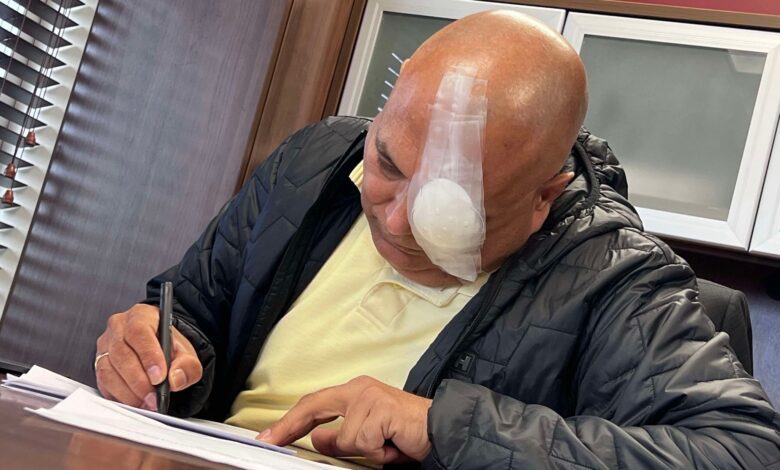
Nagar appeared publicly with a bandage over his left eye and said doctors were monitoring possible retinal damage. Police initially characterized his injuries as minor, a clinical classification that did not mean the attack was trivial.
CCTV supplied by the radio station documented part of the incident. A recording can corroborate actions in its field of view but may not capture what was said before or during a confrontation.
He linked the assault to his journalism
Nagar said the men objected to a report concerning arrests and weapons charges and challenged its accuracy. He interpreted the violence as an attempt to intimidate him and other journalists covering Calgary’s South Asian community.
That was Nagar’s stated belief. Police did not immediately confirm a motive, and reporting should not present an alleged connection as a proven instruction or organized campaign.
A man was later charged
Calgary police subsequently charged 27-year-old Dilpreet Singh with one count of assault. A criminal charge is an allegation; guilt must be established in court.
Police continued to seek information about the incident. Public release of clear footage can assist identification, but online viewers should not name or harass people based only on resemblance.
Local-language journalism serves a critical role
Community radio can report stories overlooked by larger outlets, explain public services in familiar languages and give residents a direct forum. That proximity also makes reporters highly visible to people who may dislike scrutiny.
Threats against one journalist can discourage sources and editors well beyond the individual target. The public-interest harm therefore includes both physical injury and the chilling effect on reporting.
Press freedom does not decide factual disputes
News subjects may demand corrections, submit evidence, complain to an editor or pursue lawful remedies. Freedom of expression protects criticism of journalists as well as journalism itself.
Violence is not a correction mechanism. If a report is inaccurate, accountability comes through evidence and transparent amendment, not coercion.
Newsrooms need practical safety systems
Risk assessments for contentious events, paired assignments, secure parking and rapid contact with police can reduce exposure. Newsrooms should preserve threatening messages and avoid leaving an individual reporter to manage intimidation alone.
These measures should not push journalists out of public spaces or require them to conceal ordinary reporting. Safety planning supports continued coverage rather than surrendering it.
The verified record remains narrower than speculation
The footage and police account support that Nagar was followed, argued with and assaulted outside the hall. He said the attack related to his work, and police later laid an assault charge.
No responsible account should infer guilt, motive or wider affiliation beyond the available evidence. Nagar’s promise to continue reporting is significant because intimidation depends on fear spreading. The durable response is a fair investigation, due process for the accused and visible support for journalists who investigate matters of legitimate public concern.