Metrolinx told the private consortium building Toronto’s Finch West light-rail line to withdraw its court action and return its attention to completing the project in October 2024. Mosaic Transit Group argued that unresolved dealings with the Toronto Transit Commission were preventing formal completion, while the provincial agency said important work still remained.
The dispute reached court near the end of construction
Mosaic filed an application against Metrolinx and the Ontario government seeking declarations related to substantial completion and the roles of project participants. The consortium said the line was essentially complete and that certification and payment were being obstructed.
Metrolinx rejected that framing and said legal action diverted resources from outstanding work. Public statements from each side were advocacy positions, not findings by a judge.
The TTC complicated the handover
Metrolinx owned and procured the project, Mosaic designed and built it and the TTC was expected to operate passenger service. That arrangement required systems, vehicles, procedures and safety documentation to satisfy organizations with different contractual roles.
Mosaic’s complaint referred to negotiations and approvals involving the TTC. Metrolinx maintained that the builder had to meet its contractual obligations before the line could be declared ready.
Physical completion was not the only test
Stations, track and vehicles can appear finished while testing, defect correction, operator training and safety certification continue. “Substantial completion” is also a defined contractual milestone with financial consequences, not merely a visual judgment.
A high percentage-complete figure can therefore coexist with months of remaining work. The last tasks often involve integration problems that affect the whole operating system.
The line was a major transit investment
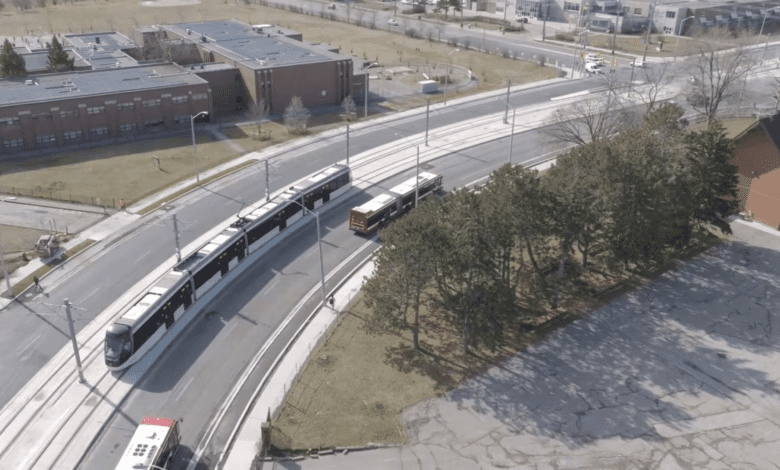
Line 6 Finch West was designed to run about 10.3 kilometres from Finch West subway station to Humber College, serving 18 stops through northwest Toronto. It would replace a busy bus corridor with higher-capacity, accessible light rail.
The project included a maintenance and storage facility and new connections with local transit. Communities along Finch Avenue had already endured years of construction disruption.
Schedules had repeatedly slipped
Construction began before the COVID-19 pandemic, and expected completion dates moved as the project encountered pandemic disruption, utility work, technical issues and legal disagreement. By autumn 2024, no reliable passenger-opening date had been announced.
The uncertainty drew comparisons with the delayed Eglinton Crosstown line, although the projects had different contracts, contractors and technical challenges.
Political pressure did not resolve technical obligations
Ontario Premier Doug Ford urged the parties to settle the dispute and finish the work. Commuters reasonably wanted a firm date, but announcing one before testing and operational readiness could create new safety and credibility problems.
Conversely, agencies overseeing public infrastructure owe residents clear explanations of remaining milestones, responsibility for delays and the consequences of contractual disputes.
The later opening provides important context
The Finch West line ultimately entered passenger service in December 2025. Its opening demonstrates that the October 2024 clash was a serious late-stage delay rather than permanent project failure.
It does not erase the cost of uncertainty or decide every contractual claim. Court proceedings and commercial settlements can continue separately from safe operation.
The central issue was accountability at the interfaces
The public disagreement exposed a recurring risk in large transit projects: one organization procures the asset, another consortium builds it and a third operator must accept it. If requirements and responsibility are unclear, every handoff can become a dispute.
Metrolinx’s demand to get back to work was a forceful public message, while Mosaic’s application sought legal leverage over certification and payment. The reliable account must present both positions and distinguish them from proven fact. For riders, the meaningful measure was never a courtroom slogan or a completion percentage; it was a tested, accessible line carrying passengers safely, which arrived only after further work and delay.