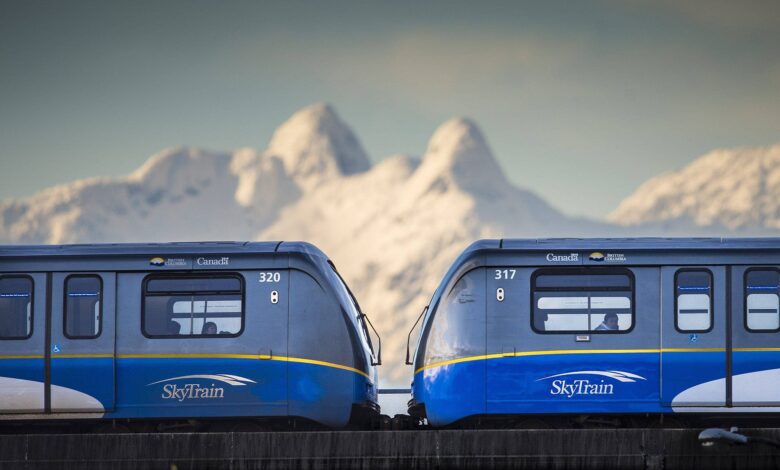
British Columbia’s New Democratic Party promised a rapid-transit connection between Park Royal and Metrotown during the October 2024 provincial election campaign. The plan began with fully separated bus rapid transit and contemplated a future upgrade to light rail or SkyTrain, responding to North Shore mayors who said chronic congestion required a firm provincial commitment.
The proposed route crossed municipal boundaries
A Park Royal–Metrotown line would connect the North Shore with Vancouver and Burnaby rather than ending at a downtown destination. It would require a reliable crossing of Burrard Inlet and coordination among TransLink, the Mayors’ Council, municipalities and the province.
The campaign announcement did not settle the exact alignment, station locations or crossing design. Those choices require engineering, environmental review and public consultation.
Bus rapid transit was the first stage
The NDP described lanes fully separated from traffic, high frequency and greater passenger capacity than an ordinary bus. Dedicated right of way is crucial because a bus trapped in the same congestion offers little time advantage.
Bus rapid transit can be delivered faster and at lower capital cost than a rail line, but its quality depends on continuous lanes, signal priority, accessible stations and sufficient service—not simply branding an existing route.
A later rail conversion was not guaranteed
The party said planning would also advance for eventual light rail or SkyTrain. That commitment preserved a long-term option without selecting technology or approving construction.
Designing the bus corridor so structures and stations can support future demand may reduce wasted investment. Prematurely assuming conversion can also add cost before ridership and route decisions are known.
North Shore leaders emphasized urgency
Mayors argued that bridge congestion affected residents, workers, goods movement and emergency reliability. Limited road crossings make incidents especially disruptive, while expensive housing forces many workers to commute into the area.
Better transit provides an alternative to driving, but it cannot eliminate every queue if population and vehicle travel continue to grow.
The funding question remained central
The campaign associated approximately C$500 million with the bus rapid-transit commitment. Large projects typically require detailed business cases and contributions from several governments before procurement.
Capital money buys vehicles and infrastructure; stable operating revenue pays drivers, maintenance and frequent service year after year. A line can be built but still underperform if the operating plan is weak.
Land use would shape ridership
Frequent rapid transit works best when homes, jobs and services are within an accessible walk or feeder trip of stations. Municipal planning around the route therefore matters as much as the vehicle technology.
New density should include affordable housing and measures against displacement. Otherwise, households most dependent on transit can be priced away from the investment.
The announcement came during an election
Campaign promises describe intended policy, not completed infrastructure. Cost estimates, timelines and route benefits remain subject to technical assessment and future budgets.
The NDP was returned to government after a very close election, allowing planning to continue. Re-election did not transform the announcement into an immediate construction contract.
A useful test is travel time people can trust
The strongest case for the link was not a particular rail brand but predictable movement between major centres without dependence on congested general-traffic lanes. Riders need frequency, accessibility and connections throughout the day.
The 2024 pledge recognized a well-documented problem and proposed a practical first stage. Its credibility would ultimately rest on published route analysis, secured capital and operating funds, and measurable progress. North Shore gridlock cannot be solved by a campaign announcement alone, but protected rapid transit can move substantially more people through a constrained corridor than continuing to rely almost entirely on private vehicles.