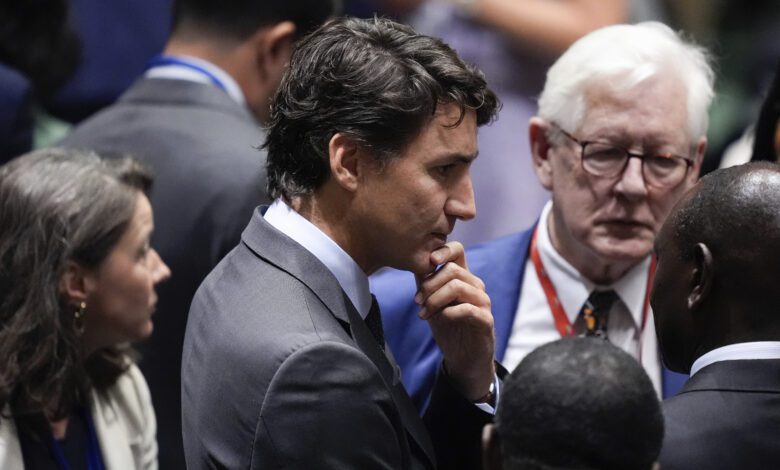
Prime Minister Justin Trudeau urged Ukraine’s allies in September 2024 to loosen restrictions on using supplied long-range weapons against military targets inside Russia. Canada supported Kyiv’s argument that it needed to strike systems and bases used for attacks, while several allies remained concerned about escalation.
Supplier restrictions shaped battlefield use
Western governments had permitted some weapons against occupied Ukrainian territory but limited deeper strikes inside Russia. Conditions differed by country and system, so there was no single NATO-wide ban.
Ukraine could use domestically produced weapons under its own policy and international-law obligations.
Kyiv emphasized military necessity
Russian aircraft, missiles and logistics operated from locations beyond the reach allowed for some supplied weapons. Ukrainian officials argued that destroying launch capacity was defensive even when the target lay across the recognized border.
Target selection still had to distinguish military objectives from civilians and civilian objects.
Trudeau stated Canada’s political support
He said Canada fully supported Ukraine using long-range capabilities to prevent Russia from attacking Ukrainian infrastructure and civilians. Canada did not control the use conditions attached by every other supplier.
His advocacy could influence debate but could not authorize American or British systems unilaterally.
Allies feared escalation and technology loss
Officials considered whether deeper attacks could broaden confrontation, provoke retaliation or reveal sensitive capabilities. Russia used nuclear rhetoric to warn NATO states against approval.
Taking those risks seriously did not mean accepting Moscow’s claim that assistance made suppliers direct belligerents.
International law permits defence with limits
Ukraine has a right of self-defence after Russia’s invasion, including against legitimate military targets involved in attacks. International humanitarian law still requires distinction, proportionality and precautions.
The legality of a specific strike depends on its target, expected civilian harm and available information.
Operational value required a coherent plan
Long-range weapons are scarce and expensive. Allies wanted to know what targets Ukraine prioritized and how strikes fit broader military objectives.
Removing a restriction would not by itself supply sufficient missiles, intelligence or air defence.
The UN setting broadened the message
Trudeau met President Volodymyr Zelenskyy in New York and reaffirmed Canadian military, financial, humanitarian and development assistance. The diplomatic push accompanied Ukraine’s effort to sustain support through another winter.
UN advocacy did not imply that the Security Council had authorized individual weapons decisions.
Accurate reporting avoided binary claims
The choice was not simply between unrestricted attacks and abandoning Ukraine. Allies could set geographic, targeting and intelligence conditions while reassessing them as the battlefield changed.
Canada’s position was clear political support for greater latitude. The decision for each weapon remained with its supplier and Ukraine, subject to military effectiveness, escalation management and international law.
Allies also needed mechanisms to investigate disputed strikes and correct targeting lessons. Public debate was weakened when every call for caution was labelled appeasement or every request for greater range was labelled reckless escalation. A defensible policy assessed identifiable military benefit, civilian risk and strategic consequences for each class of weapon rather than relying on slogans.
That discipline was essential for durable public trust and democratic accountability.