
After Iran’s Missile Attack, Israel May Be Ready to Risk All-Out War
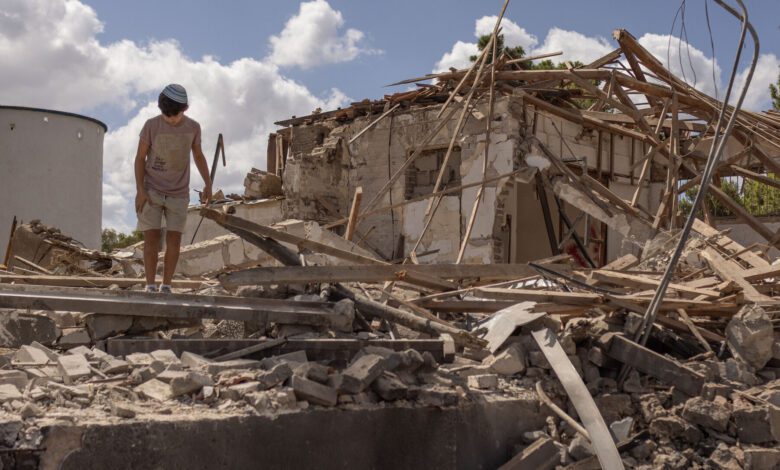
Iran fired approximately 180 ballistic missiles at Israel on October 1, 2024, creating pressure for a direct Israeli response and raising the risk of a wider regional war. Most missiles were intercepted or missed critical targets, but the scale of the attack changed the strategic calculation.
Iran described the barrage as retaliation
Tehran linked the attack to the killings of Hezbollah leader Hassan Nasrallah, Hamas political leader Ismail Haniyeh and an Iranian commander. It invoked self-defence in a letter to the United Nations.
Israel called the strike an unlawful direct attack and said Iran would face consequences. Competing legal claims did not remove the duty of both states to protect civilians and comply with international law.
The attack was Iran’s second in 2024
Iran had launched drones and missiles at Israel in April after an attack on its diplomatic compound in Damascus. Israel’s subsequent response was limited enough to interrupt immediate escalation.
The October barrage used more ballistic missiles and followed a rapid expansion of Israeli operations against Hezbollah in Lebanon. Analysts therefore saw a greater chance that Israel would answer openly and at larger scale.
Defence reduced but did not erase danger
Israeli systems, supported by allied forces, intercepted many incoming weapons. Some missiles struck military areas, and debris and impacts still created danger on the ground.
Interception is expensive and never guaranteed. A large volley can overwhelm defences, and every launch creates risks from falling fragments, navigation errors or incorrect assessment of a target.
Israel considered a range of targets
Possible responses discussed publicly included missile sites, air defences, command facilities, oil infrastructure and nuclear-related locations. Each option carried a different escalation and civilian-risk profile.
Attacking nuclear or energy facilities could have produced environmental and economic consequences far beyond a military exchange. Allies urged restraint while affirming Israel’s right to defend itself.
The conflict already spanned several fronts
Israel was fighting Hamas in Gaza, exchanging fire with Hezbollah and confronting Iran-aligned armed groups in Iraq, Syria and Yemen. Israeli forces had also begun ground operations in southern Lebanon.
A direct Israel-Iran cycle could draw in the United States and affect shipping and energy markets. Regional civilians would carry much of the cost even if leaders described each step as calibrated.
Israel retaliated later in October
On October 26, Israeli aircraft struck military targets in Iran, including air-defence and missile-related facilities. Israel said the operation responded to months of attacks; Iran confirmed damage and military deaths.
The strikes avoided publicly known nuclear and oil facilities, limiting the immediate economic shock. They still marked an overt attack by Israel inside Iran and preserved the risk of further retaliation.
Deterrence can become an escalation ladder
Each government argued that force was needed to deter the other. Yet repeated retaliation can produce the opposite result when leaders believe failing to answer will signal weakness.
Intelligence uncertainty, domestic politics and alliance commitments make a supposedly controlled exchange difficult to contain. Communication through intermediaries and clear limits can reduce miscalculation but cannot make warfare safe.
The headline described a real risk, not certainty
Israel was demonstrably preparing a response after October 1, and the eventual strike was more public than its April action. Full-scale war did not begin that month, showing that forceful retaliation and deliberate limits occurred at the same time.
The responsible conclusion is neither that escalation was inevitable nor that missile defence made the attack inconsequential. Iran launched a major direct barrage; Israel later hit Iranian military targets; and both decisions brought the region closer to a confrontation whose humanitarian and economic effects would extend far beyond either country.



